Originally reported on August 7, 2026, by Mahe for Foresight News.
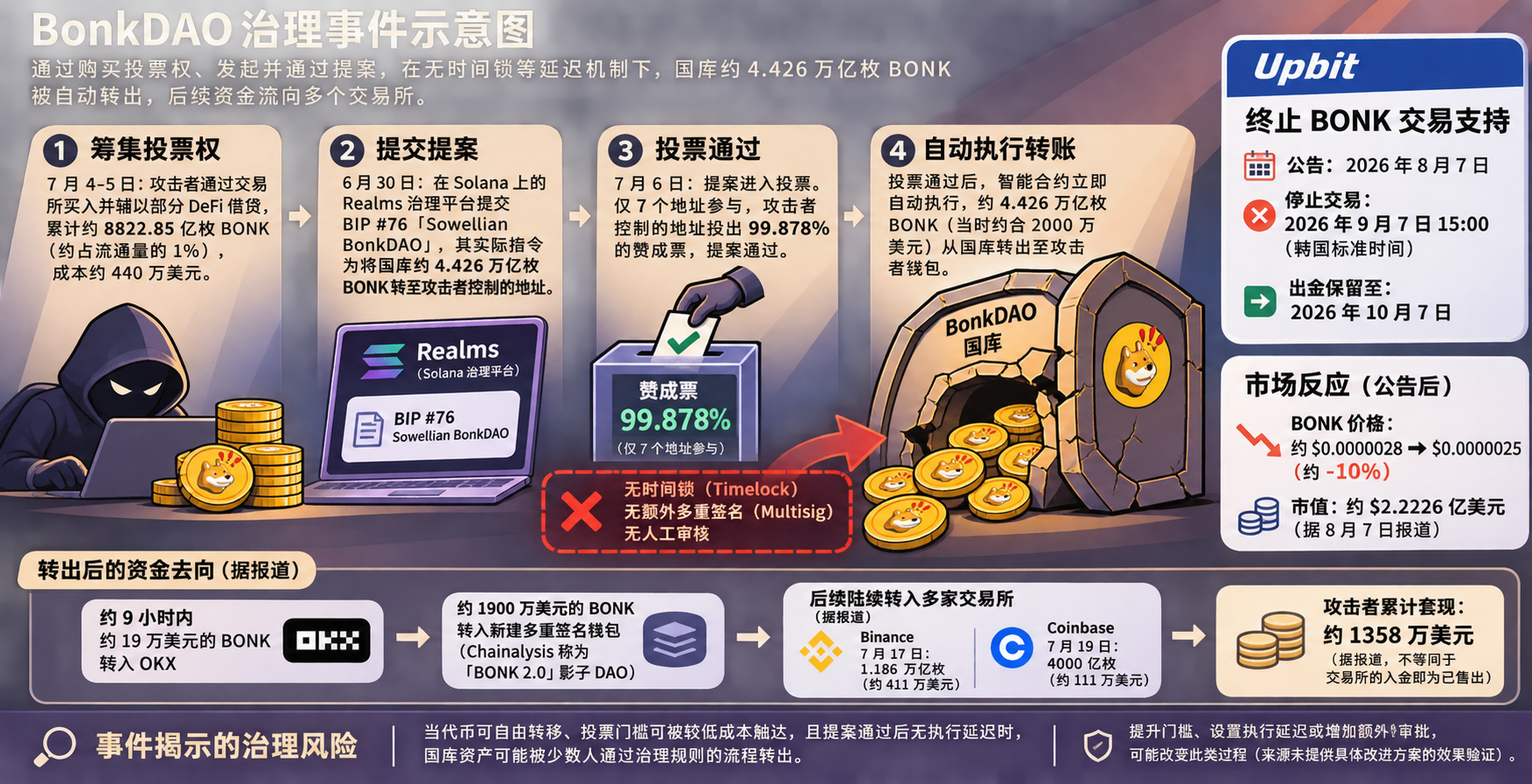
Upbit announced on August 7 that it would end trading support for BONK/KRW and BONK/USDT at 15:00 Korea Standard Time on September 7, 2026. Withdrawals would remain available until October 7. The decision followed a BonkDAO governance vote that transferred approximately 4.426 trillion BONK—worth about $20 million at the time—from its treasury.
Upbit said its assessment found shortcomings that could cause user losses. It cited unresolved or unexplained security incidents involving distributed ledgers used by the operator, as well as failures by the issuer or operator to disclose important information promptly through appropriate electronic channels. Those are Upbit’s stated assessment findings, not a finding that the BONK token contract was compromised.
How the treasury transfer passed
According to Foresight News’s account, an attacker submitted proposal BIP #76, “Sowellian BonkDAO,” through Solana governance platform Realms on June 30. Although framed as a governance improvement, its operative instruction would send roughly 4.426 trillion BONK from the treasury to an address the attacker controlled.
With approximately 88 trillion BONK circulating, the reported 1% voting threshold was about 880 billion tokens. The attacker reportedly assembled around 882.285 billion BONK between July 4 and 5, through exchange purchases and some DeFi borrowing, at a cost of approximately $4.4 million. Voting began July 6. Foresight News reports that only seven addresses participated and that attacker-controlled addresses supplied 99.878% of the votes in favor.
Once the proposal passed, the transfer executed automatically. The report says there was no timelock, additional multisignature approval or manual review before execution. The mechanism matters: the reported treasury loss resulted from a proposal passing under the governance rules then in place, rather than a reported private-key leak or token-contract exploit.
What the reported fund movements establish—and what they do not
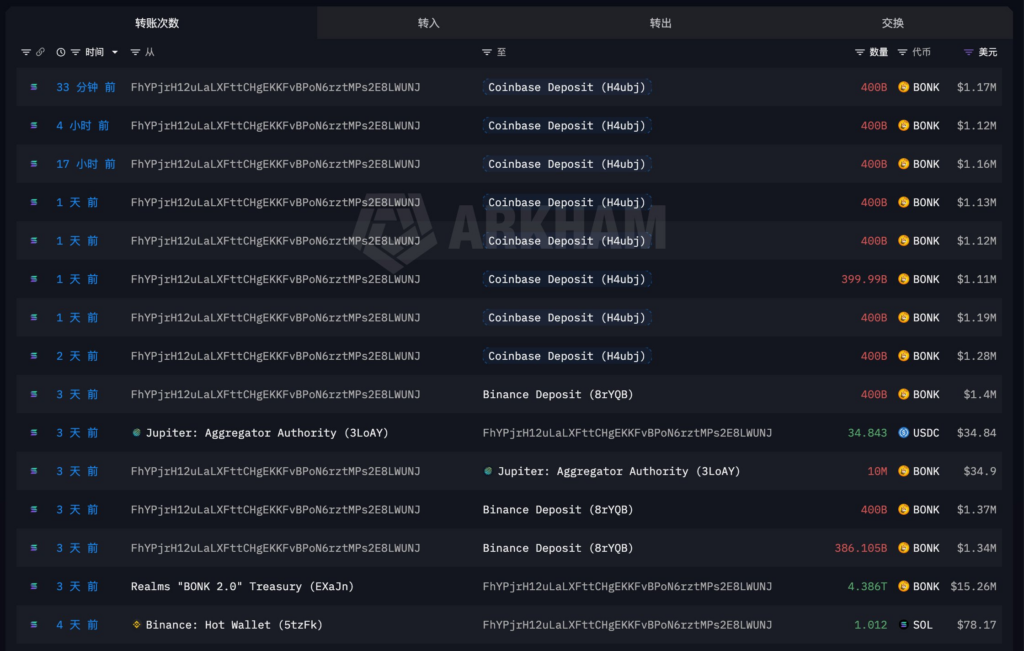
Foresight News reports that about $190,000 in BONK reached OKX within roughly nine hours of the treasury transfer. It says approximately $19 million went to a newly created multisignature wallet that Chainalysis described as a “BONK 2.0” shadow DAO. The article also describes subsequent transfers to exchanges, including 1.186 trillion BONK, then valued at about $4.11 million, to Binance on July 17. Citing on-chain analyst Yu Jin, it reports a transfer of 400 billion BONK, valued at about $1.11 million, to Coinbase on July 19. Its stated estimate of the attacker’s cumulative cash-outs is approximately $13.58 million; exchange deposits alone should not be read as independently verified sales.
BONK fell from about $0.0000028 to $0.0000025 after Upbit’s announcement, a decline of roughly 10%, according to the article. It reported a market capitalization of $222.26 million at the time. Those figures describe the market reaction in the original August 7 report, not current prices.
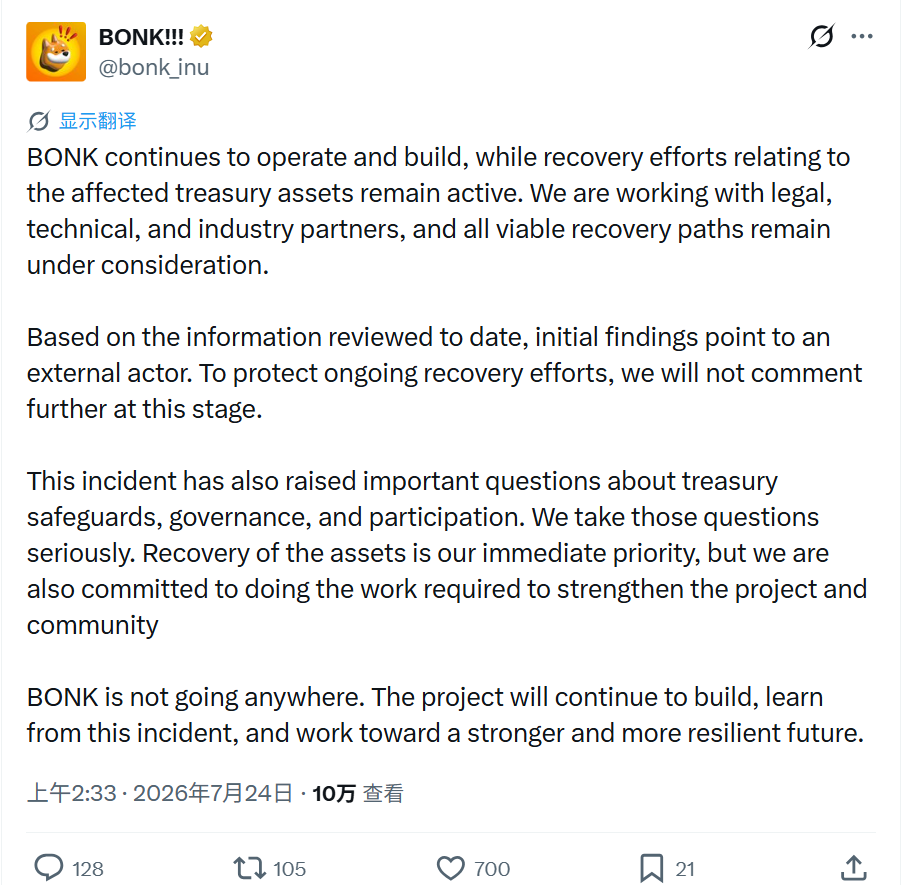
Bonk acknowledged a malicious governance proposal and the roughly $20 million treasury transfer. In a July 13 update, BonkDAO said it was monitoring flagged wallets and exploring recovery options; it also said users’ personal assets and the BONK token contract were unaffected. It confirmed on July 23 that recovery efforts continued. As of the August 7 report, Foresight News had found no official confirmation that a large amount had been returned to the treasury or successfully frozen.
The case illustrates a specific governance exposure: a transferable token can confer enough voting power to authorize a treasury payment when the threshold is reachable and execution has no delay. A higher threshold, an execution delay or additional approval could change that process, but the source provides no test of how any particular redesign would have performed here.
Source: panewslab.com (originally published 2026-08-07 18:51 UTC+8)