In an analysis published on November 16, 2026, Biteye examined whether Bitcoin’s decline was nearing a bear-market bottom. It reported that BTC fell as low as $62,006 on November 15, nearly half its October 2025 peak. The article’s central question was not whether a bottom had been confirmed, but how historical cycle comparisons stood against weaker funding conditions.
What the reported flows show
Biteye cited approximately $1.91 billion in cumulative net outflows from U.S. spot Bitcoin ETFs over seven consecutive trading days through November 13. It also reported that the supply of major stablecoins had fallen by about $11.5 billion over the preceding 30 days. The article did not name the underlying ETF or stablecoin datasets, so those figures cannot be independently reconstructed from the supplied material.
CZ, as quoted by Biteye, proposed several possible contributors to the decline: ETF outflows, macroeconomic pressure, security concerns and regulatory uncertainty. His suggestion that investors might sell BTC to fund a potential Anthropic IPO was presented as market speculation, not an established capital flow. Biteye separately argued that attractive stablecoin yields could divert demand from volatile assets; its description of yields near 10% as “risk-free” should not be read as evidence that such products carry no risk.
What the cycle comparisons suggest
Biteye put the peak-to-bottom declines in the 2013, 2017 and 2021 BTC bear markets at roughly 85%, 84% and 77%, over 406, 364 and 366 days respectively. With more than 13 months elapsed since the October 2025 peak, it argued that the current decline had entered a historical time window in which a bottom might occur. Three past cycles, however, do not establish that this one has bottomed.
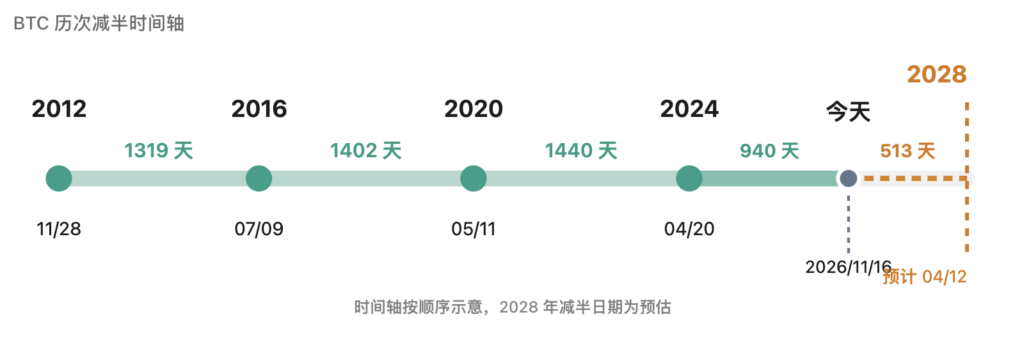
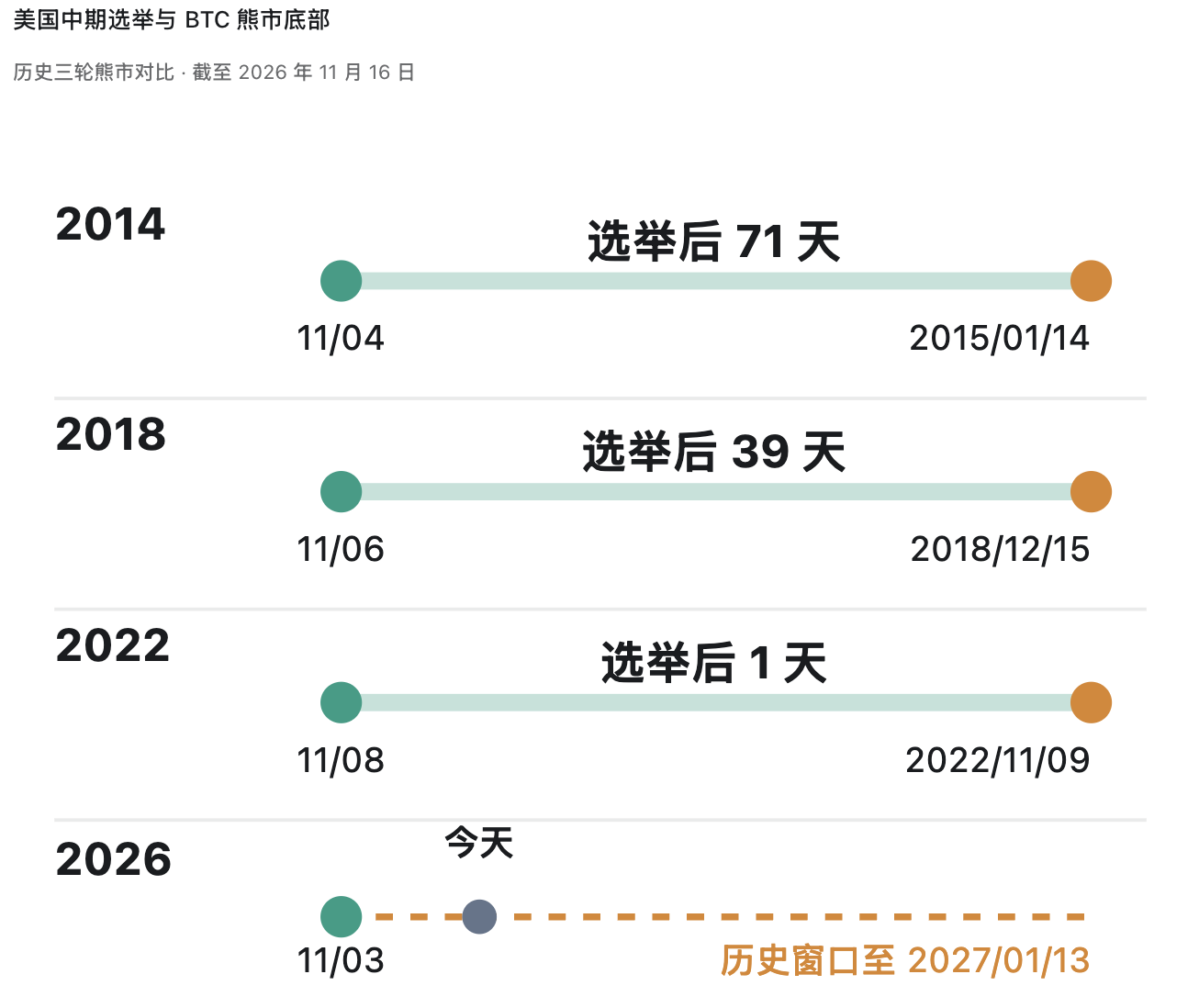
The article offered two further timing comparisons. It said recoveries in three earlier cycles began approximately 272, 404 and 462 days before a Bitcoin halving, suggesting a possible recovery window in January–July 2027 if that pattern repeated. It also said the BTC bottoms of 2015, 2018 and 2022 occurred 1–71 days after U.S. midterm elections. Neither comparison demonstrates a causal link or fixes a date for the next recovery.
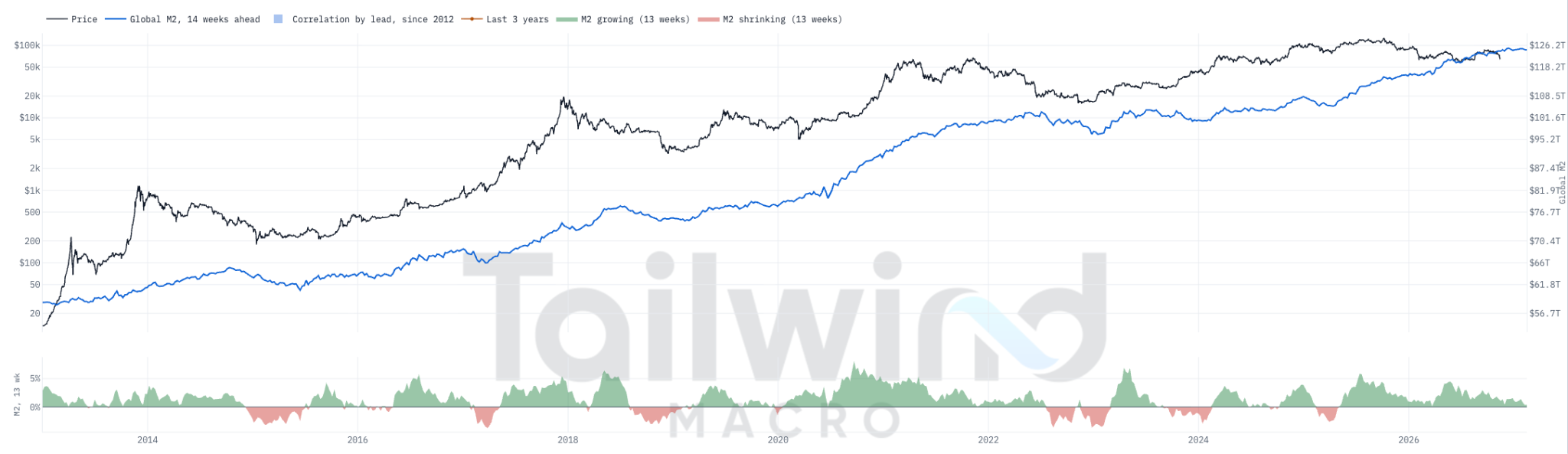
On liquidity, Biteye reported U.S. M2 growth of 5.7% year over year and cited Coinbase research for an approximately 110-day lead between turning points in global M2 and BTC. It consequently identified the first quarter of 2027 as a period to watch, rather than a forecast established by current on-chain measurements.
The limit of the bottoming case
Biteye’s counterweight was its description of tighter financial conditions: a U.S. 10-year Treasury yield near 5.15%, a dollar index above 103, market expectations of about 64 basis points of possible rate increases over the following 12 months, and BTC trading below the average acquisition cost of some institutional holders, including MicroStrategy. These were figures and assessments in the November 2026 report, not live readings.
Biteye ultimately proposed late 2026 through the first half of 2027 as a potential bottoming window. The reported ETF outflows and stablecoin-supply contraction describe contemporaneous pressure; the historical patterns offer hypotheses about timing. Neither establishes that institutional demand will return or that BTC has reached its final low.