A report published on November 7, 2026, described a sharp reversal across US technology stocks and crypto markets after the US midterm elections. Its central explanation was that investors were reassessing the outlook for AI data-center construction following Democratic gains. That is a market interpretation, not proof that a change in policy caused the sell-off.
What the crypto data showed
Bitcoin briefly rose above $80,000 after the election result became clear, then fell below $76,000 on November 5. CoinGecko data cited in the report showed it dropping from $78,767 to $75,986 within one hour as the Nasdaq declined. Ether briefly fell below $2,250.
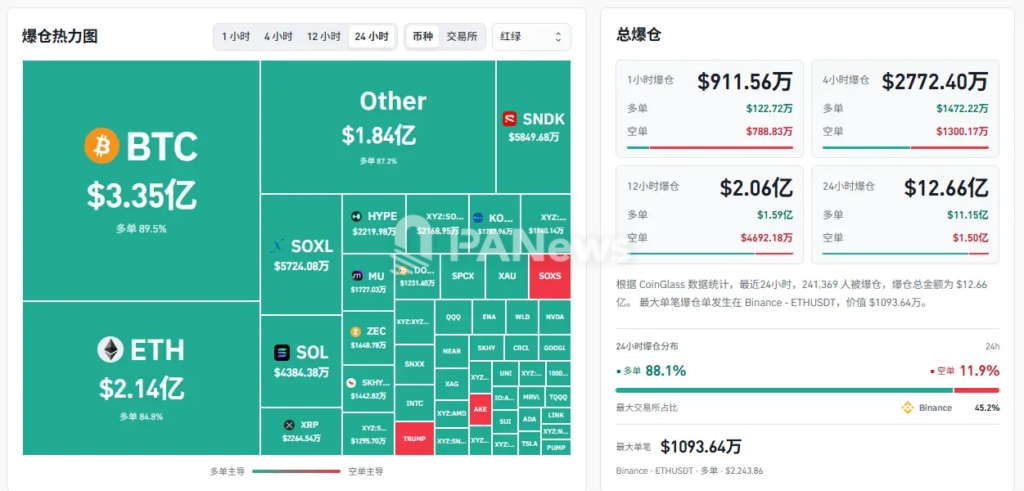
The reversal was visible in derivatives. According to CoinGlass figures available when the report was prepared, $1.251 billion in positions had been liquidated over the preceding 24 hours. Long positions accounted for $1.108 billion, or 88.6%, and 239,896 traders were liquidated. The report also cited CoinGlass liquidation-map figures of $58.32 million for SNDK-related contracts and $56.71 million for SOXL-related contracts—both above the $43.25 million recorded for SOL. These figures describe positions closed during the move; they do not establish what initiated it.
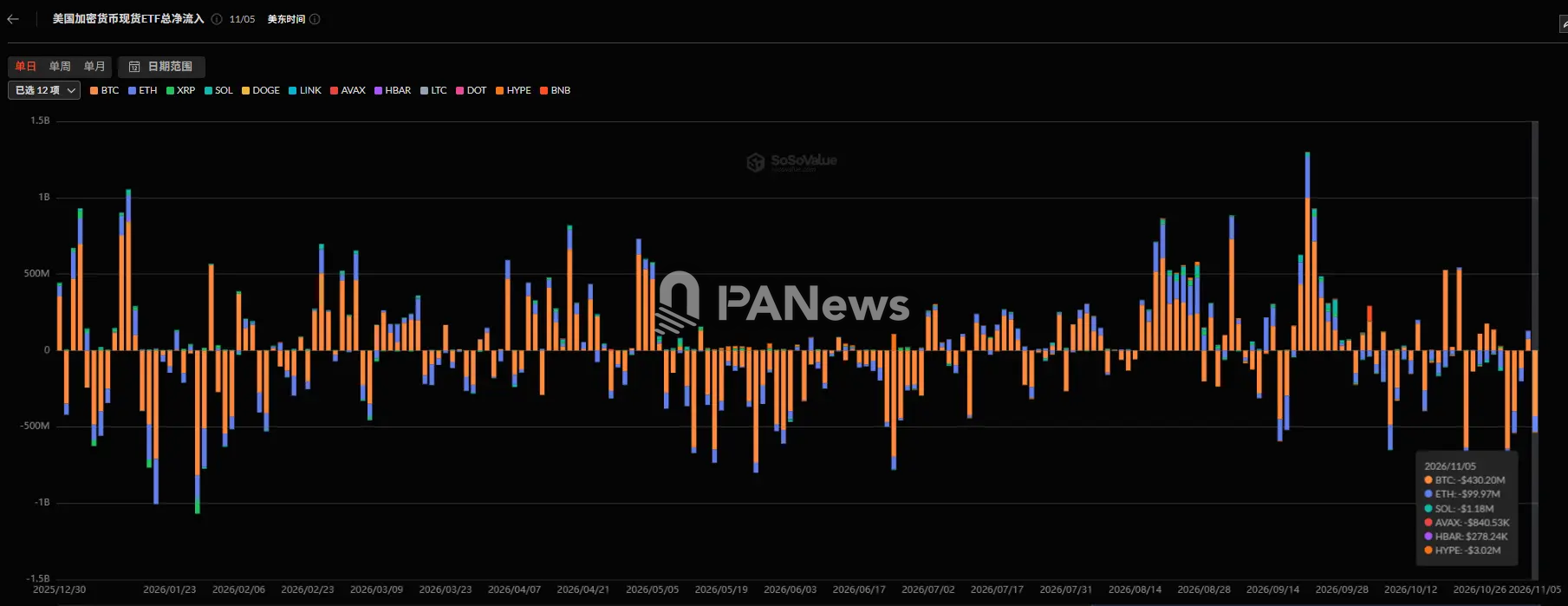
Fund flows pointed to pressure that preceded the election result. SoSoValue recorded $430 million in net outflows from US spot Bitcoin ETFs on November 5, with none of the 12 funds registering a net inflow. Their combined net assets fell from $102.26 billion the previous day to $96.65 billion. Across the five trading days beginning October 30, the funds recorded approximately $1.51 billion in net outflows; November 4 was the only net-inflow day. US spot Ether ETFs recorded $99.97 million in net outflows on November 5.
Why the AI trade mattered to crypto
The report linked the broader repricing to concern that planned data centers could face construction delays. UBS estimated that potential pauses might affect roughly 30% of planned additions to US data-center capacity for 2028. That was an estimate of potential exposure, not an enacted nationwide restriction.
The distinction matters for Bitcoin miners expanding into AI infrastructure. SemiAnalysis estimated that Texas represented about 30% of planned US data-center capacity due to come online in 2028. Bernstein subsequently cut price targets for seven mining companies, citing tighter financing and uncertainty in Texas, and identified IREN, Riot and Cipher as having the greatest Texas exposure among the companies it covered. On November 5, shares of IREN fell 16.95% and Cipher fell 14.62%, according to the report.
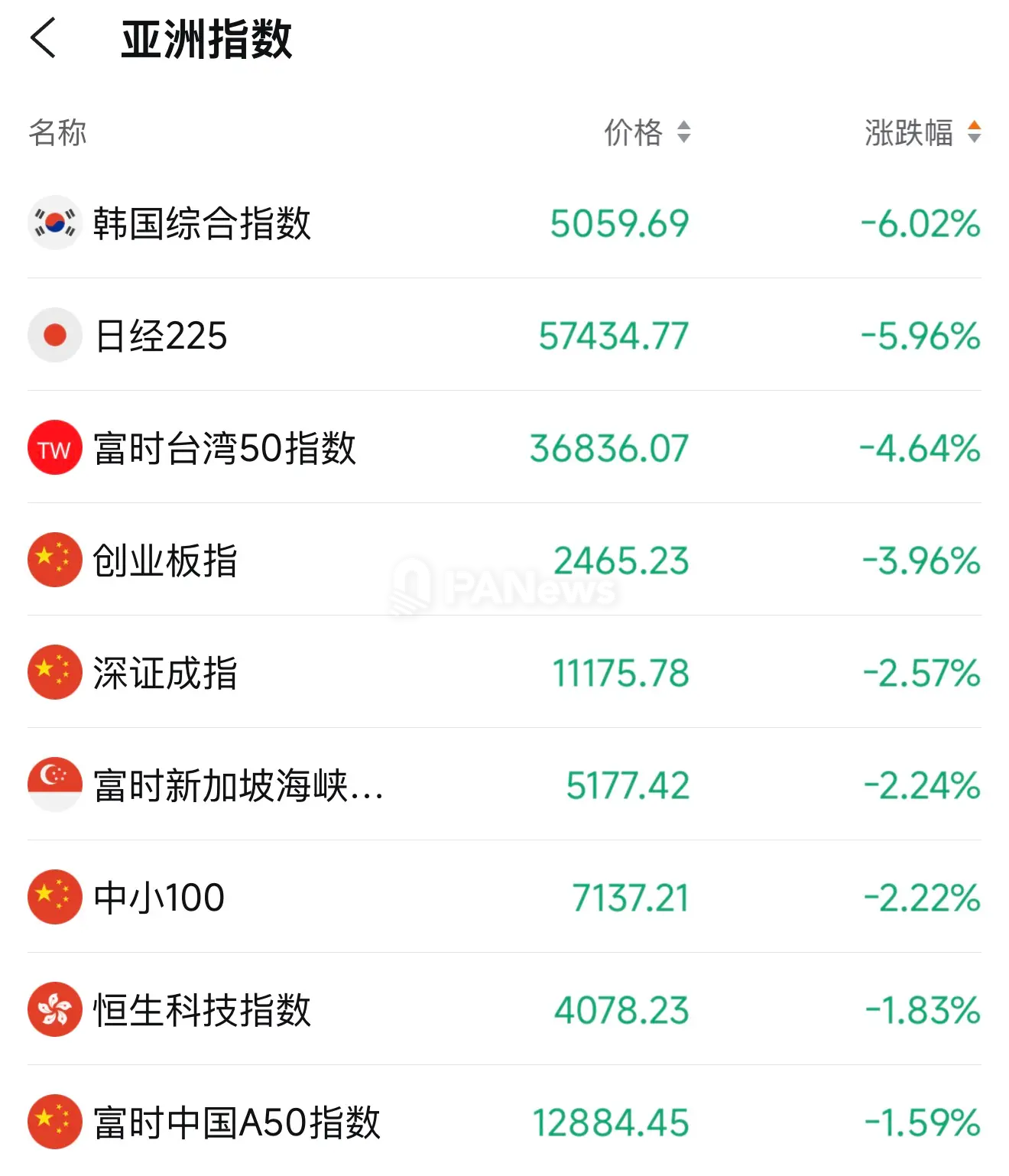
The available evidence shows simultaneous pressure on crypto assets, crypto-linked equities and the AI infrastructure trade. It does not isolate a single cause for Bitcoin’s decline. The report also cited CryptoQuant analyst Darkfost’s observation that Bitcoin’s 90-day rolling correlation with the S&P 500 was above its historical average, without supplying a correlation value.
Policy remains a separate uncertainty
The report also raised a legislative risk following the election. It said French Hill would relinquish the House Financial Services Committee chairmanship in January despite winning reelection, while Maxine Waters was a leading candidate to succeed him; Elizabeth Warren was expected to lead the Senate Banking Committee. Those prospective leadership changes should not be treated as completed appointments.
The CLARITY bill had failed to advance in a September Senate procedural vote, 49–50. Bloomberg attributed its stalled progress to a dispute over ethics provisions addressing officials’ conflicts of interest. Stifel strategist Brian Gardner expected little prospect of progress in the current Congress or a bipartisan compromise in the next. Those are forecasts, not legislative outcomes.
At the time of the November 7 report, investors were also awaiting a possible Anthropic IPO roadshow and Nvidia’s scheduled November 17 earnings release. Whether either would stabilize the AI trade—and, by extension, crypto markets—remained an open question.