As reported on November 16, 2026, Kava Chain said an attacker had exploited its HARD Lend application and removed approximately 53.9 million KAVA from lending pools, valued at about $1.83 million in the report. Kava said it had contained the contract vulnerability and proposed a seven-day community governance vote on permanently ending new HARD Lend borrowing and lending activity. The shutdown was a proposal, not an enacted rule.
How Kava described the exploit
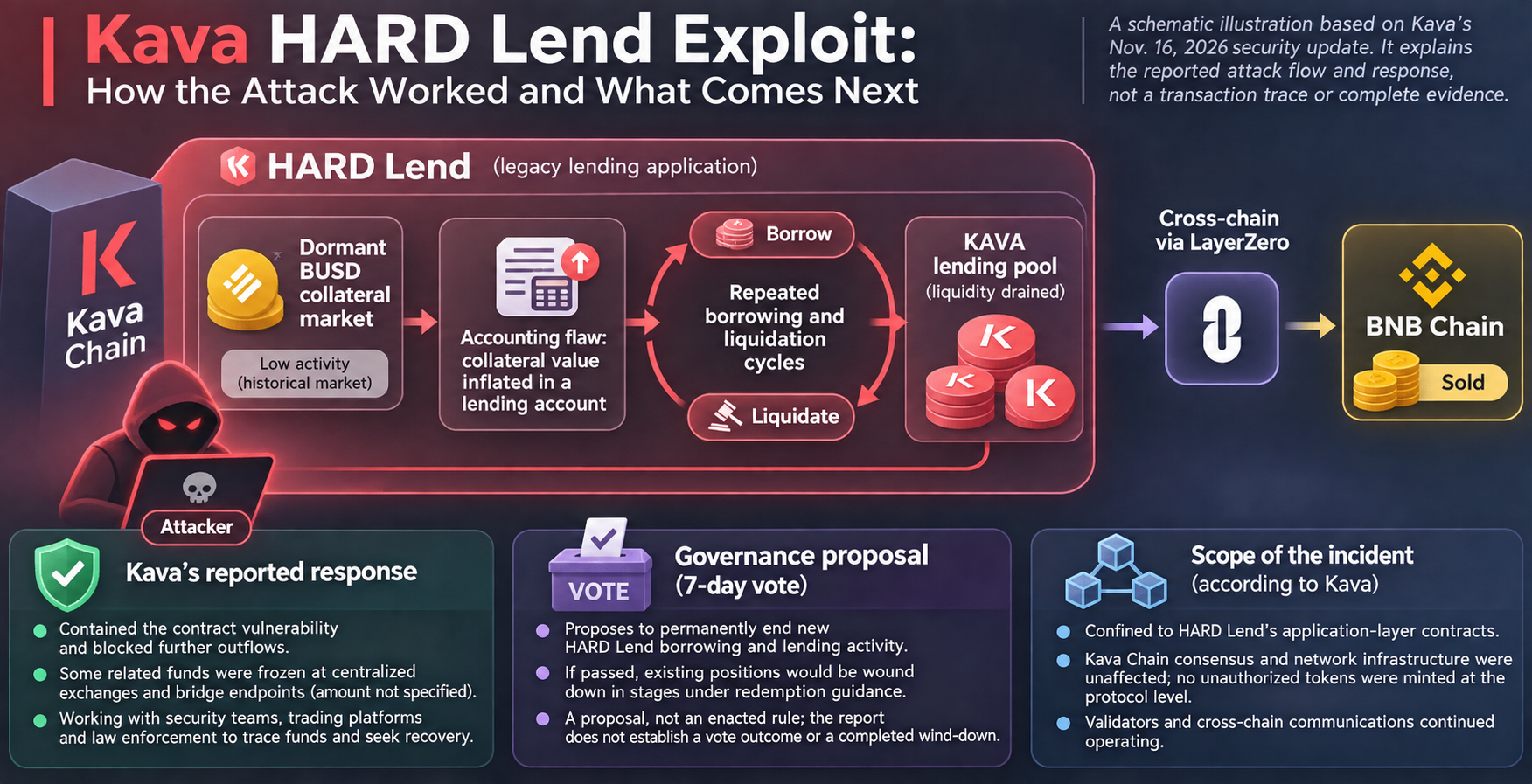
According to Kava’s security update, the entry point was an accounting flaw in a dormant BUSD collateral market. The attacker allegedly inflated the collateral value recorded in a lending account, then repeated borrowing and liquidation cycles to drain available pool liquidity. The supplied report does not provide transaction-level evidence or enough accounting detail to independently test that explanation.
The report says approximately 49.2 million of the removed KAVA—91.28% of the reported total—was bridged to BNB Chain through LayerZero and sold. It describes this as on-chain data but does not identify a dataset or measurement method. As of November 16, it said some related funds had been frozen at centralized exchanges and bridge endpoints, without specifying an amount. Kava contributors were working with security teams, trading platforms and law enforcement to trace funds and seek recovery.
Kava characterized the incident as confined to HARD Lend’s application-layer contracts. It said Kava Chain consensus and network infrastructure were unaffected, no unauthorized tokens were minted at the protocol level, and validators and cross-chain communications continued operating. Those are Kava’s stated boundaries for the incident, not evidence that affected lending-pool users had recovered their assets.
If the governance proposal passed, new HARD Lend lending activity would be permanently closed and existing positions would be wound down in stages under redemption guidance. The report does not establish a vote outcome or a completed wind-down.