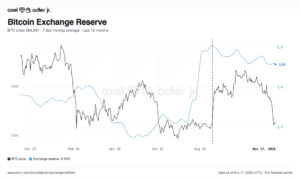
In an analysis reported at 17:44 China time on November 18, 2026, HTX Research analyst and HTX DeepThink contributor Chloe argued that clearing leveraged positions would not, by itself, establish a bottom for Bitcoin. Her central concern was whether spot demand—particularly through U.S. spot BTC ETFs—would recover.
Flows and price action
Chloe said BTC had fallen below $70,000 the previous week and was trading around $64,000–$65,000 during the November 18 Asian session. ETH was near $1,800, while she characterized market sentiment as being in an extreme-fear range.
According to her analysis, U.S. spot BTC ETFs had recorded more than $2 billion in cumulative net outflows since the start of November. A small net inflow on November 16 was not enough, in her view, to confirm a reversal. The supplied report does not identify the ETF-flow dataset or a sentiment-index provider, so those figures and characterizations remain attributed to Chloe rather than independently verified measurements.
She described long-position liquidations, thin spot liquidity and investors reducing risk exposure as mutually reinforcing pressures. Even if derivatives leverage declined substantially, continued ETF outflows could leave spot demand too weak to support a sustained recovery.
What the analysis was watching
Chloe linked the broader risk-off backdrop to questions about returns on AI-related spending. She said Nvidia’s latest quarterly results and next-quarter revenue guidance exceeded expectations, but investors remained concerned about major technology companies’ expanding capital expenditure and the time needed to turn it into commercial returns. She also pointed to attention around a potential Anthropic listing, elevated U.S. Treasury yields and possible changes in global trade policy. These were proposed influences on risk appetite, not demonstrated causes of Bitcoin’s price move.
Her near-term BTC levels were $62,000–$63,000 as a support area, $60,000 as a psychological level if that area failed to hold, and $65,000–$68,000 as an initial rebound range. She also identified 7,200–7,400 as an area to watch for the S&P 500. Chloe viewed the November 18–19 APEC leaders’ meeting in Shenzhen as a potential external catalyst if positive signals emerged on trade, technology export controls or supply chains, while stressing that any lasting crypto-market effect would depend on institutional inflows returning.
The resulting assessment was cautious: Chloe considered post-deleveraging volatility and price discovery more likely than an established recovery. In her view, a sustained rebound would require technology stocks to stabilize, ETF flows to turn positive and expectations for macro liquidity to improve together.