A launch platform can earn fees from a token that never develops a lasting market. That is the central incentive problem examined in a Sparsity analysis reported by BlockBeats on November 12, 2026. Sparsity’s figures are approximate and were measured through November 9, 2026; they describe platform activity and selected cohorts, not the outcome of every buyer’s trade.
More launches, fewer tokens reaching the threshold
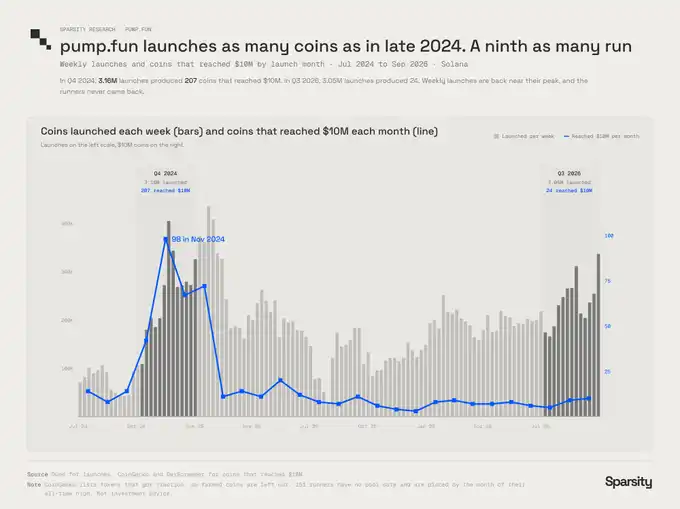
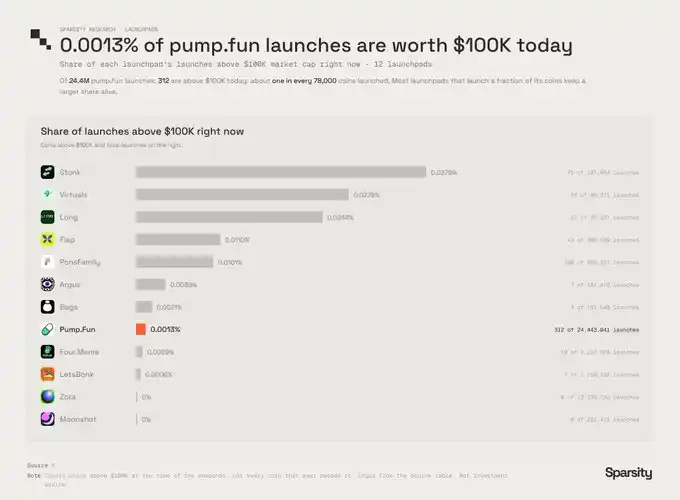
Sparsity counted 3.05 million tokens launched on Pump.fun in the third quarter of 2026. Only 24 had ever reached a $10 million market capitalization. Launch volume was similar in the fourth quarter of 2024—3.16 million tokens—but 207 reached that threshold. Expressed per 100,000 launches, the count fell from about 6.5 to 0.8.
The analysis also reports that combined monthly trading volume on Pump.fun’s bonding curve and PumpSwap fell from roughly $25 billion–$30 billion in the first quarter of 2026 to about $13.8 billion in October. These observations show weaker outcomes alongside continued high issuance; they do not, by themselves, establish why the decline occurred.
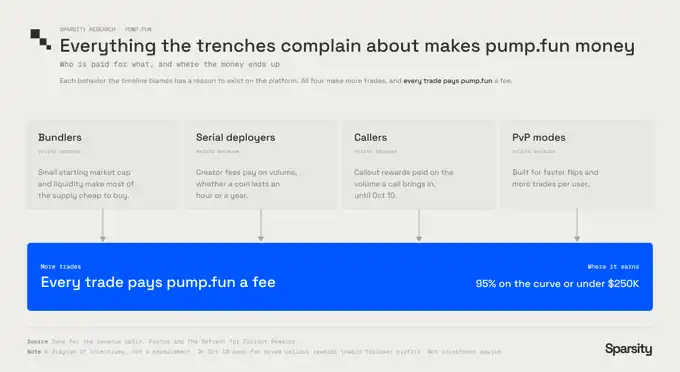
Where the fees accrue
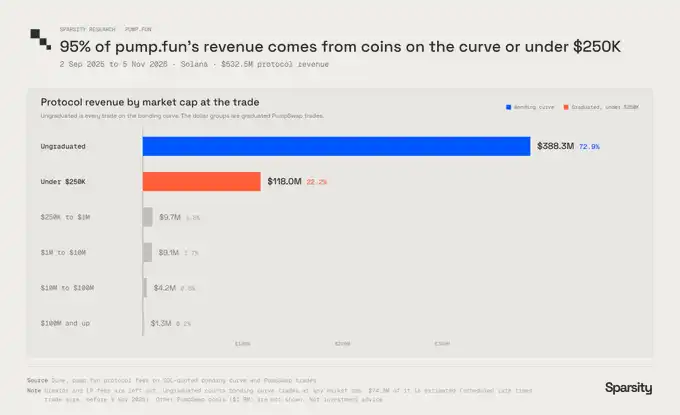
A bonding curve is the pricing mechanism used during a token’s initial launch phase: buys and sells move its price according to preset rules. According to Sparsity, about 95% of Pump.fun’s protocol revenue came from tokens still on the bonding curve or valued below $250,000. In the bonding-curve phase, each buy or sell incurred a 1.25% fee: 0.95% to Pump.fun and 0.30% to the creator. At an unchanged price, buying and then selling would therefore incur about 2.5% in fees.
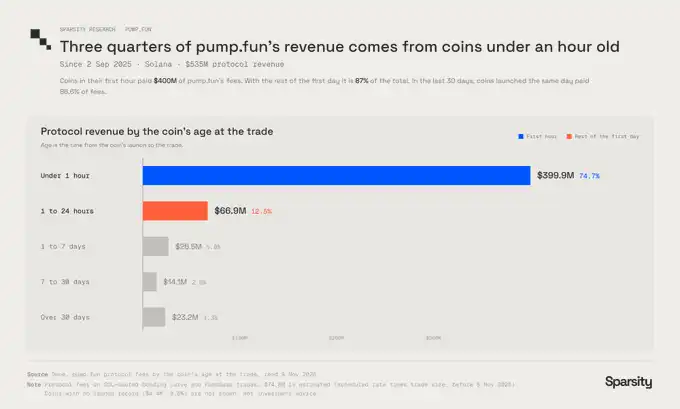
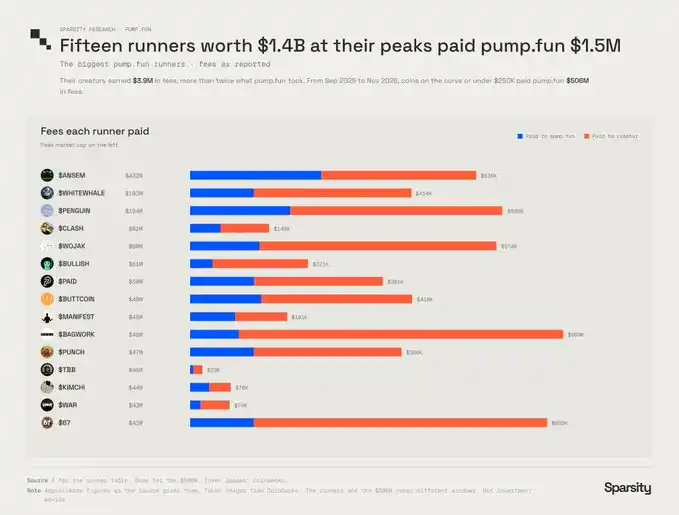
Sparsity attributes roughly three-quarters of the revenue it examined to tokens less than an hour old, and 87% to tokens less than a day old. It reports approximately $506 million in revenue from bonding-curve or sub-$250,000 tokens, compared with about $1.5 million from a group of 15 tokens whose combined market capitalizations reached $1.4 billion at their respective peaks. The comparison is between differently defined groups, but it illustrates the research question: how much does the platform depend on early trading rather than tokens that sustain larger markets?
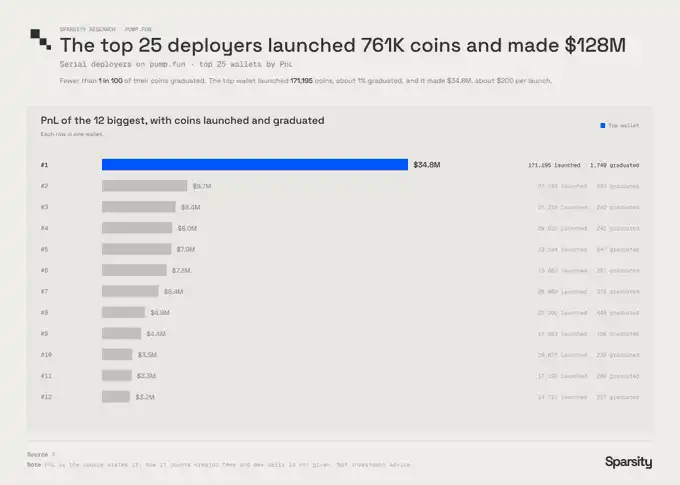
The creator fee presents a related incentive. Sparsity says the 25 most prolific launching wallets issued a combined 761,000 tokens; fewer than 1% graduated from the bonding curve, while those wallets earned a combined $128 million. That is evidence of substantial earnings among this selected group, not proof that every creator used the same strategy.
Promotion rewards and their limits as evidence
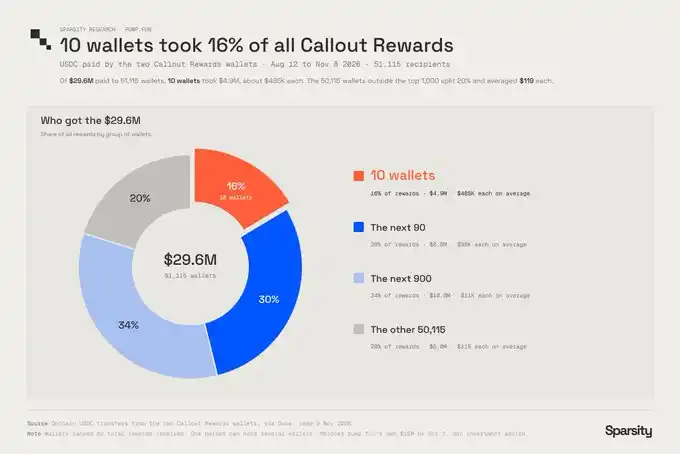
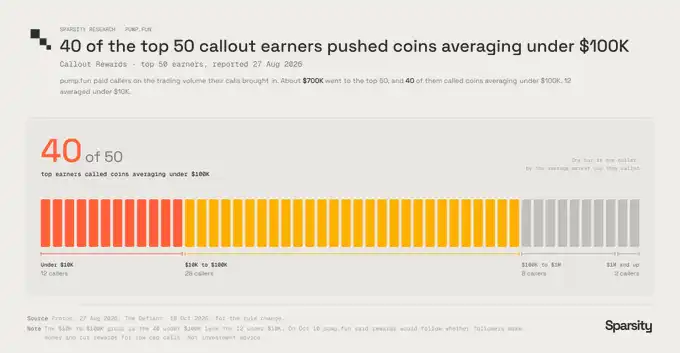
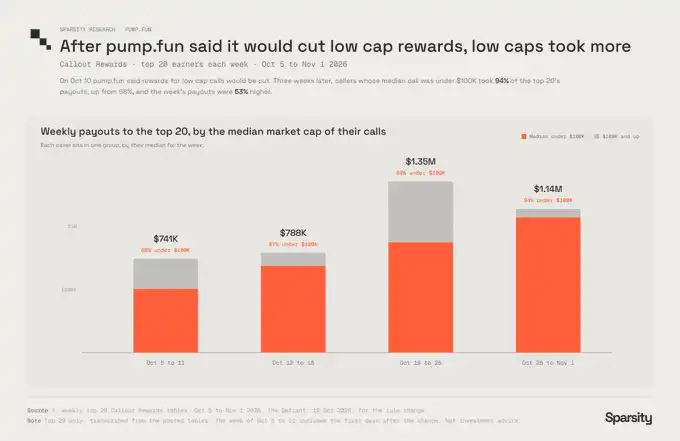
Sparsity reports that Pump.fun paid $29.6 million in promotion rewards to 51,115 wallets from August through its measurement period. Ten wallets received 16% of those rewards, while the median recipient received $13. Pump.fun said on October 10 that it would make rewards depend on whether followers profited and reduce rewards for promoting low-market-cap tokens. Sparsity found that, over the following three weeks, promoters whose featured tokens had a median market capitalization below $100,000 received 94% of rewards paid to the top 20 recipients, up from 68% before the change. That comparison does not establish whether the announced criteria were fully implemented or isolate their effect from other changes in activity.
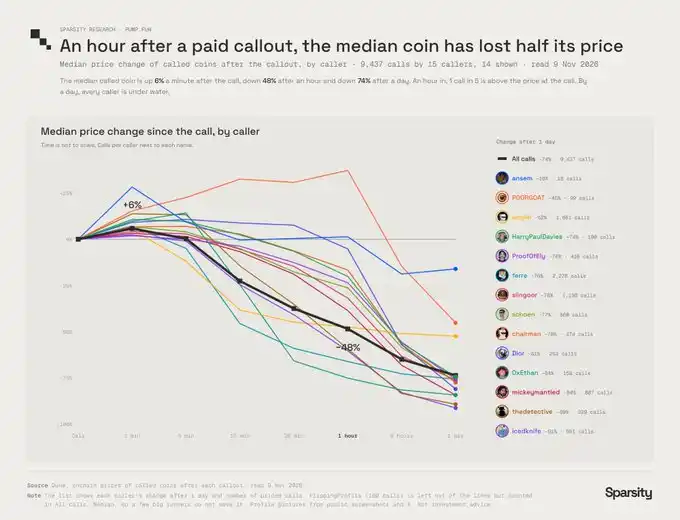
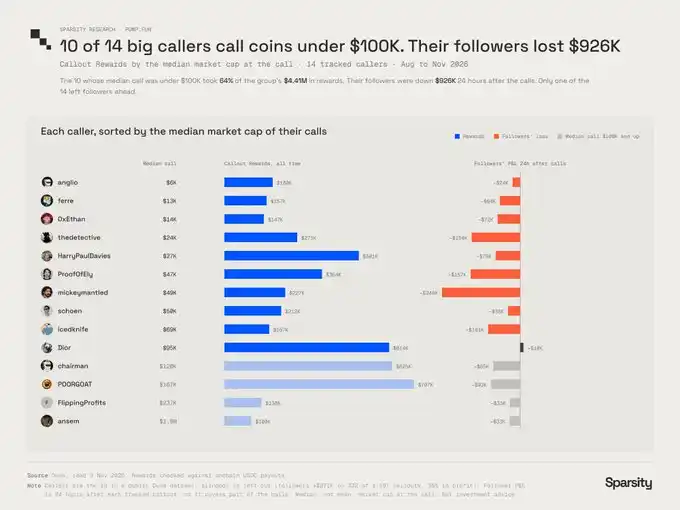
In a separate sample of 14 promoters tracked by the researchers, the median return of featured tokens was up 6% one minute after a post, down 48% after an hour and down 74% after a day. Sparsity estimated that followers in this sample lost a combined $926,000 after one day. These are results for a tracked sample, not a platform-wide return estimate.
A proposed change to the launch mechanism
The analysis proposes replacing the initial bonding curve with a fixed-price subscription. Buyers would subscribe at the same price; a launch that failed to meet a minimum funding target within a set period would be refunded. Once its funding conditions were met, a contract would create a liquidity pool, while the platform would charge only after a successful raise. This is a design proposal, not an enacted Pump.fun rule.
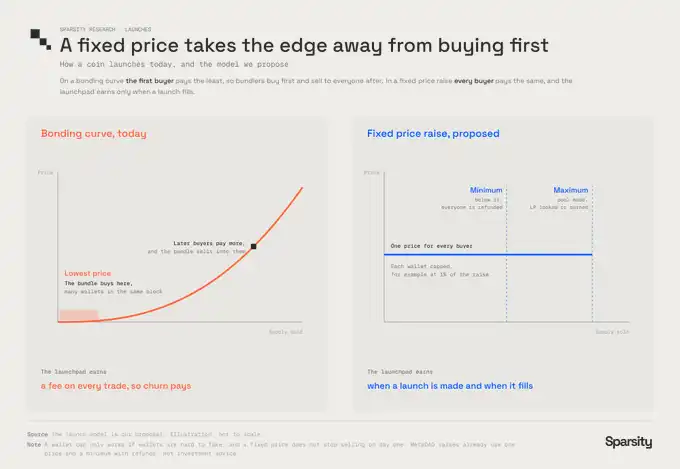
Its intended trade-off is clear: charging at completion rather than on every early trade would remove one route for the platform to earn from failed launches. It would not guarantee durable demand. As the analysis acknowledges, a per-wallet purchase limit could be bypassed with multiple wallets without effective Sybil resistance, and fixed-price buyers could still sell immediately after launch. The data support scrutiny of launch-stage incentives; they do not demonstrate that the proposed mechanism would reverse the decline in tokens reaching larger market capitalizations.