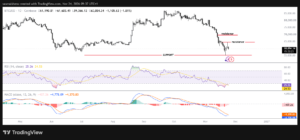
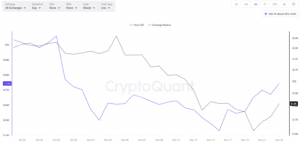
In research reported on November 24, 2026, Grayscale argued that Bitcoin was oversold but that its near-term direction might depend more on AI-related market risks than on blockchain fundamentals. That is Grayscale’s assessment, not a prediction established by the indicators alone.
Grayscale research head Zach Pandl said Bitcoin fell to about $55,000 on Saturday, November 21, below its June low. He described the downturn as Bitcoin’s longest recorded bear market by duration, though its shallowest by depth. The research cited more than $2 billion in net outflows from global crypto ETPs in the preceding week, substantial conversions of stablecoins into fiat, futures open interest falling to summer lows, and high premiums for downside protection in options markets as signs of oversold conditions.
The report also pointed to AI-related events since early November—including what it described as Jensen Huang’s brief departure from and return to Nvidia, and an Anthropic IPO—as influences on markets. It said Bitcoin briefly rose above $64,000 after Huang’s return before retreating, while the Nasdaq retained its gains. The supplied report does not establish that those events caused Bitcoin’s moves.
According to the report’s on-chain analysis, short-term holders bought heavily between $62,000 and $65,000, putting that range near their break-even level. It also identified the average cost basis of holders with 10,000–100,000 BTC as a support area, saying Saturday’s low remained just above it. Grayscale viewed prices above that area as attractive to medium- and long-term holders, while allowing that Bitcoin could continue to move with technology stocks until AI-related risks became clearer. The report did not name the on-chain dataset behind those cost-basis estimates.