As reported on November 19, 2026, Pearl’s FP8 upgrade had activated on testnet, not mainnet. The change targets a specific obstacle to its proposed model: using AI inference computations both to serve customers and to compete for proof-of-work blocks. Whether that model can support commercial AI services at acceptable cost remained unproven.
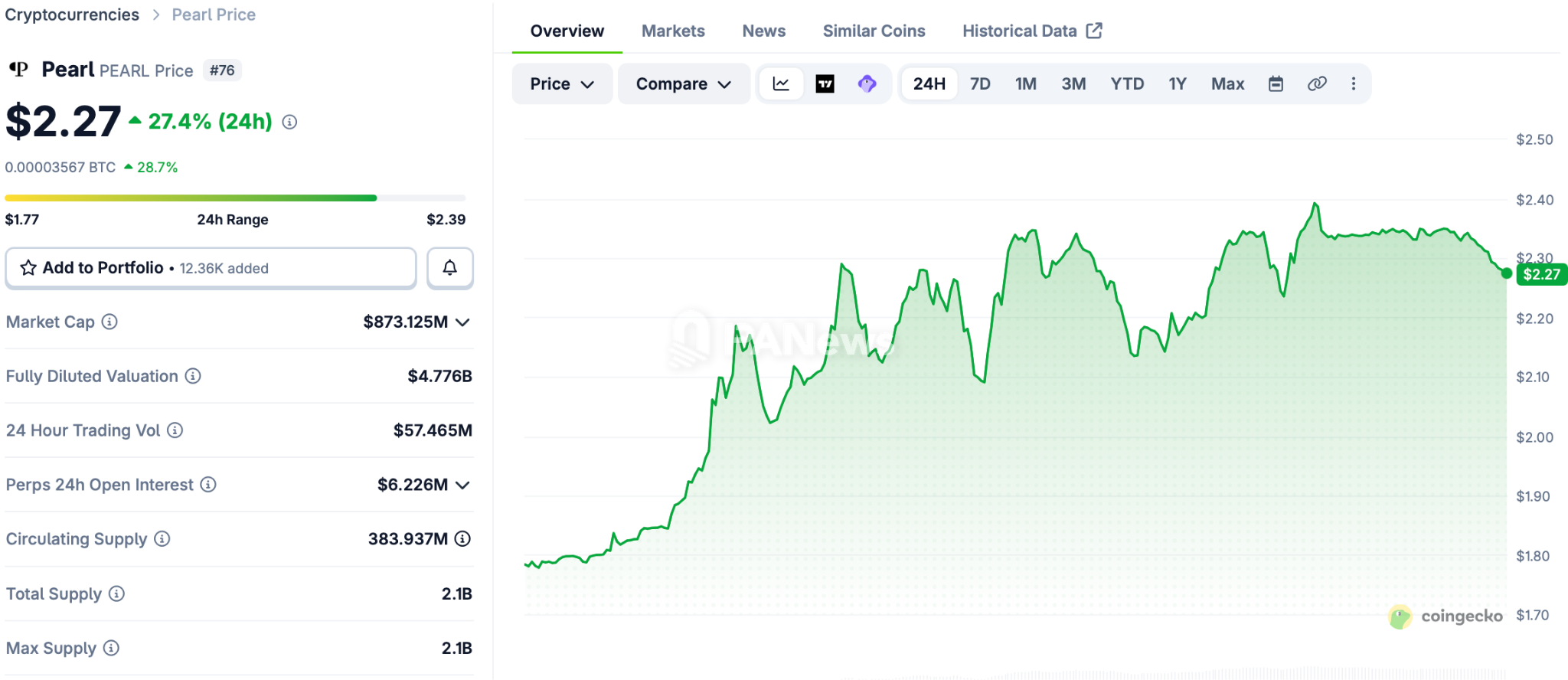
Pearl had also drawn market attention. The original report cited CoinGecko data showing PRL up about 28% over the preceding 24 hours and approaching its October 21 all-time high of $2.44. It identified Coinbase and Kraken listings, Syncracy Capital’s disclosure of a large position, and the FP8 testnet launch as developments accompanying the move. Those events do not, by themselves, establish what caused the price increase.
Why FP8 matters to the mechanism
Pearl’s design seeks to make matrix multiplication used in AI inference eligible as proof of work. Its earlier mainnet implementation accepted INT7 computation proofs, while the report said mainstream inference services did not generally offer that format. Converting models to use it created friction: the report put the associated service-speed reduction at 10%–15%.
The FP8 upgrade, described as proposal PIP-3, is intended to support a format used in AI data centers and allow models with BF16 weights to be converted to FP8 for mining. That is a compatibility change, not proof that most blocks will come from paying AI workloads. The report cited a Blockworks estimate that, before the upgrade, less than 1% of blocks matched real AI models. Random matrix calculations could still compete for rewards under the earlier rules.
The upgrade also narrows eligible hardware. According to the report, differences in FP8 rounding across chip families led Pearl to restrict supported hardware to Nvidia’s Hopper and Blackwell generations, including H100, B200 and RTX 50-series GPUs. It said older Nvidia generations and AMD and Intel chips would be excluded under that plan. The restriction trades broader hardware participation for computations the network can verify consistently.
What the reported test measured
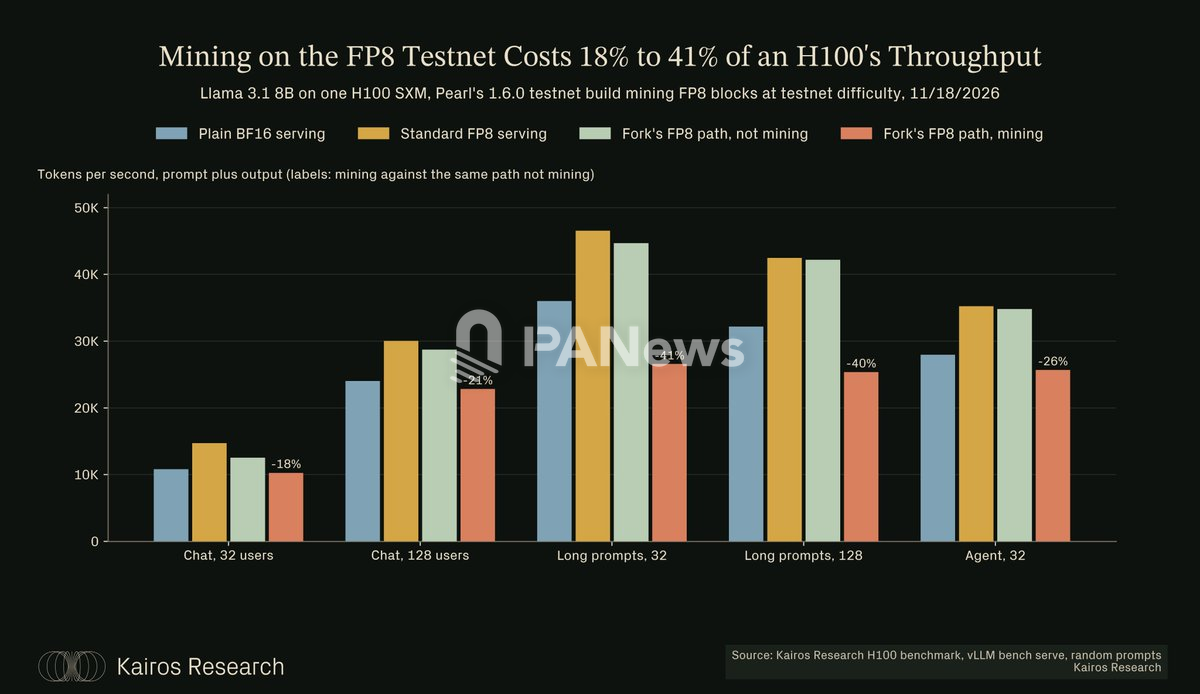
Kairos Research, which the report identified as a PEARL holder, rented one H100 and ran Llama 3.1 8B on the testnet. It reported successfully mining an FP8 block while serving the model. Against the same setup with mining disabled, however, Kairos measured throughput losses of 18%–21% for ordinary conversation, 26% for long agent prompts and 40%–41% for prompt-only long-context workloads. Compared with a standard FP8 inference setup, its reported throughput deficit was 24%–48%. These are results from that test configuration, not a network-wide performance measurement; they also exceed the 1%–5% loss the report attributed to Pearl’s expectations.
Kairos reported that effective mining was limited to the prompt-processing, or prefill, stage. In its tests, attempting to mine during answer generation reduced accuracy on a mathematics evaluation from roughly 87% to 1%. It also reported uneven model compatibility: OLMoE ran, but it could not load the tested Qwen3 models. The findings leave open whether later software versions can improve throughput and model support.
Network and token questions remain separate
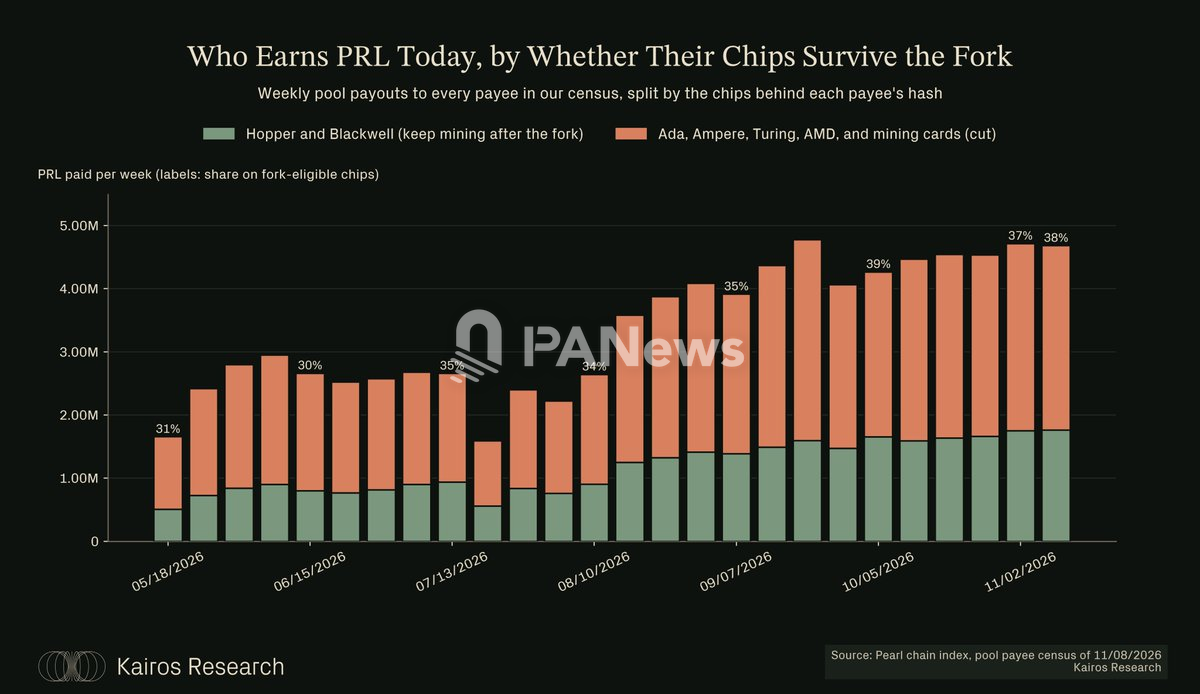
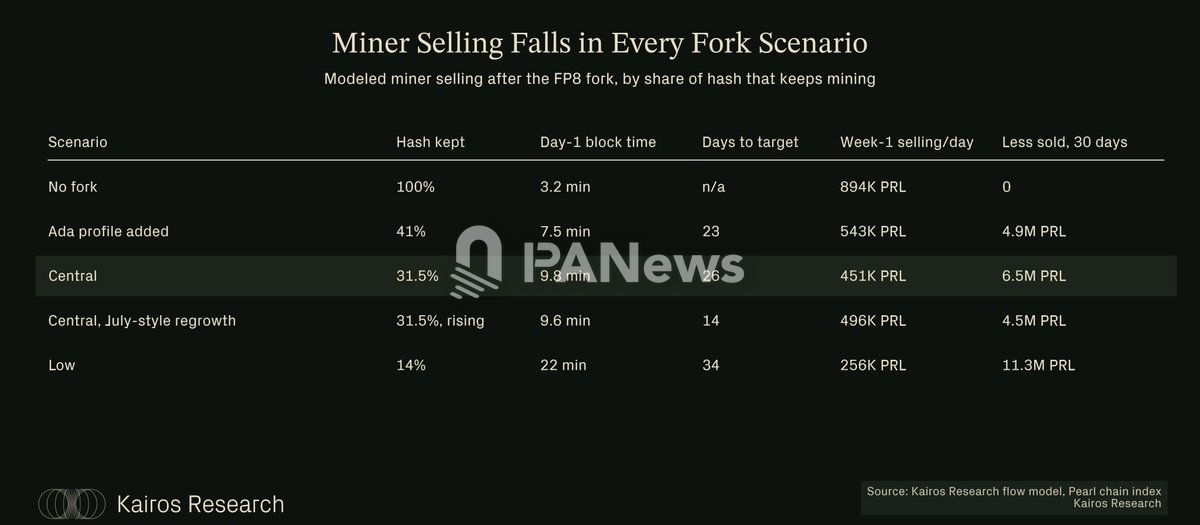
From a survey of six mining pools and about 24,200 addresses, Kairos estimated that Hopper and Blackwell hardware supplied roughly 37% of network hash power. It projected a substantial drop if the proposed hardware restrictions reached mainnet. The report also gave a roughly 31.5% retention estimate under its hard-fork scenario, rising to 41% if a subsequent Ada-architecture option were incorporated; these figures reflect different scenario assumptions rather than a completed migration.
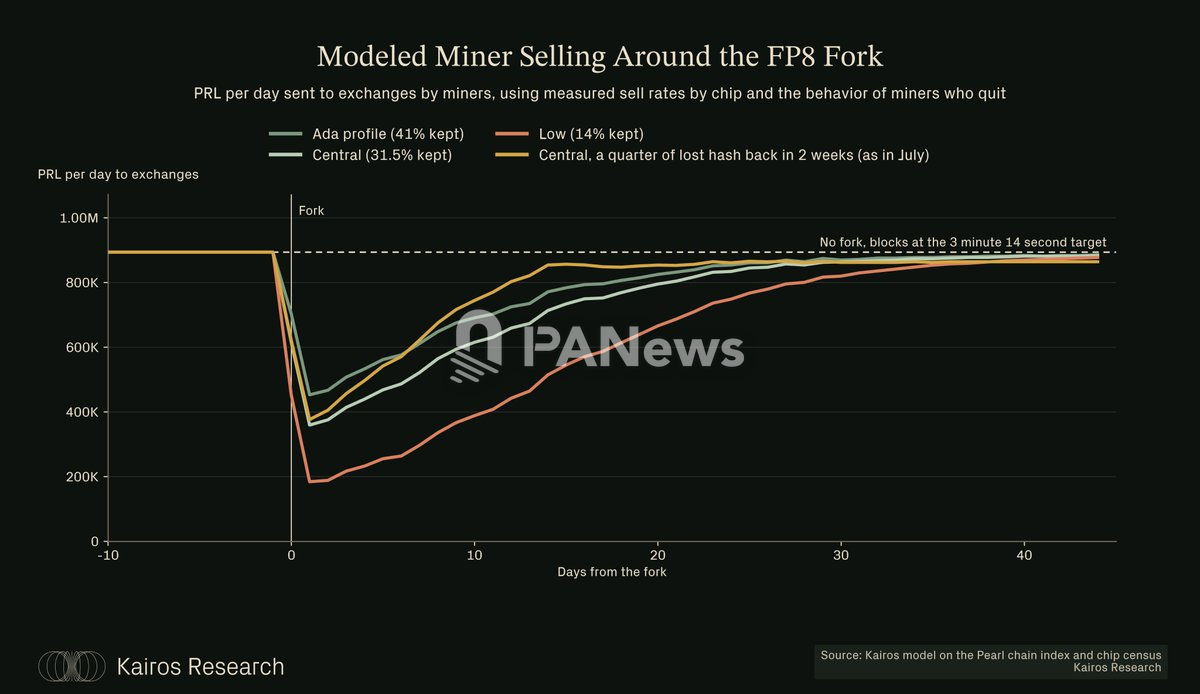
Kairos’s on-chain analysis found that the miner groups it examined had historically transferred 85%–96% of mining proceeds to exchanges or over-the-counter venues. Its model projected roughly 6.5 million fewer PEARL sold by miners in the first 30 days after a hard fork, partly because slower block production before a difficulty adjustment would reduce new rewards. That is a forecast, not an observed post-fork result.
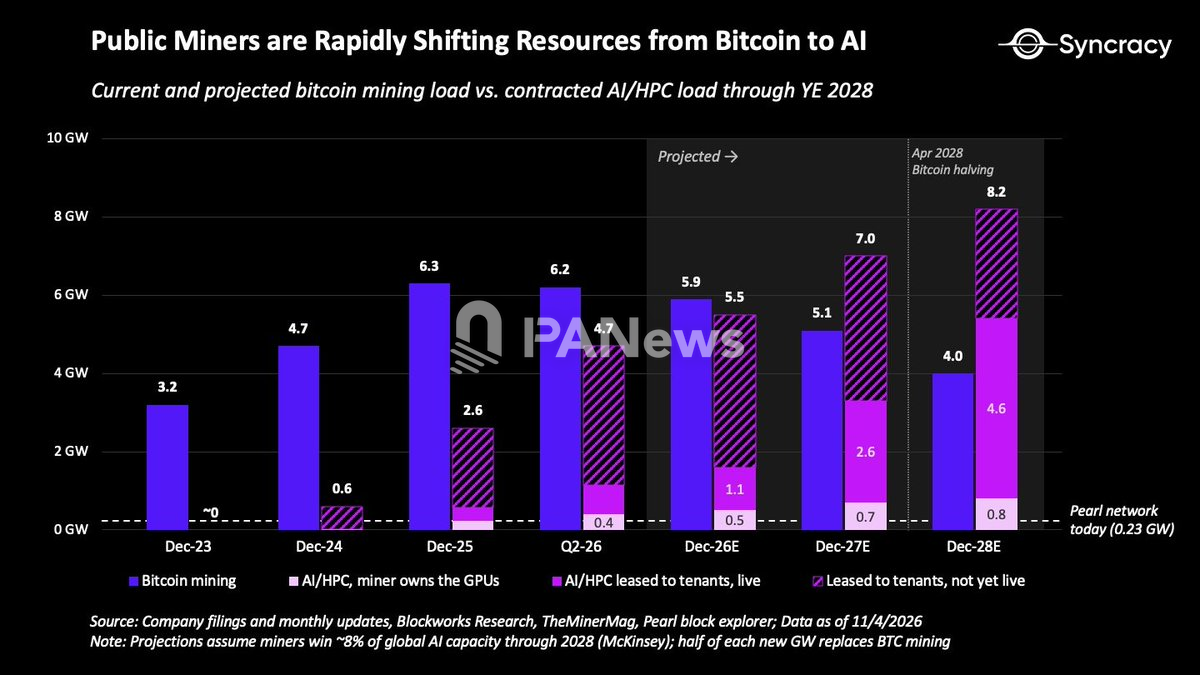
The security and valuation case has further limits. Syncracy Capital’s proposed “P-Day”—a future point when Pearl’s compute and energy footprint exceeds Bitcoin’s—is a thesis, not a measured milestone. And even if AI providers earn inference revenue while mining, PEARL holders do not thereby acquire a claim on that revenue. The report also raised concerns about early token concentration and noted that the project’s stated voluntary lockup of part of its holdings was not enforced by an on-chain smart-contract lock.
The decisive test is therefore not testnet activation or price performance. It is whether a mainnet upgrade can attract verifiable, customer-serving AI workloads without imposing losses that outweigh mining revenue—and whether its hardware restrictions leave the resulting network sufficiently resilient.