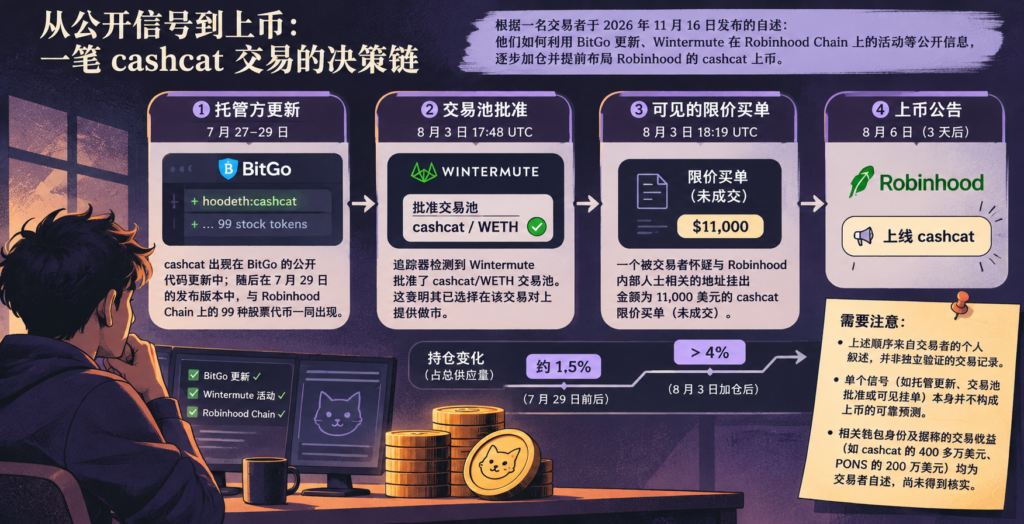
In an account published on November 16, 2026, a trader described using public BitGo updates and activity attributed to Wintermute on Robinhood Chain to anticipate Robinhood’s cashcat listing. The account provides a sequence of signals and the trader’s interpretation of them, but not an independently verified record of the trades or profits.
From a custody update to a trading signal
The trader said an earlier review of Robinhood listings showed Wintermute transferring tokens to a Robinhood hot wallet about an hour before announcements. That observation prompted them to monitor wallets they associated with Wintermute on Robinhood Chain, along with public updates from BitGo, which they identified as a custody partner.

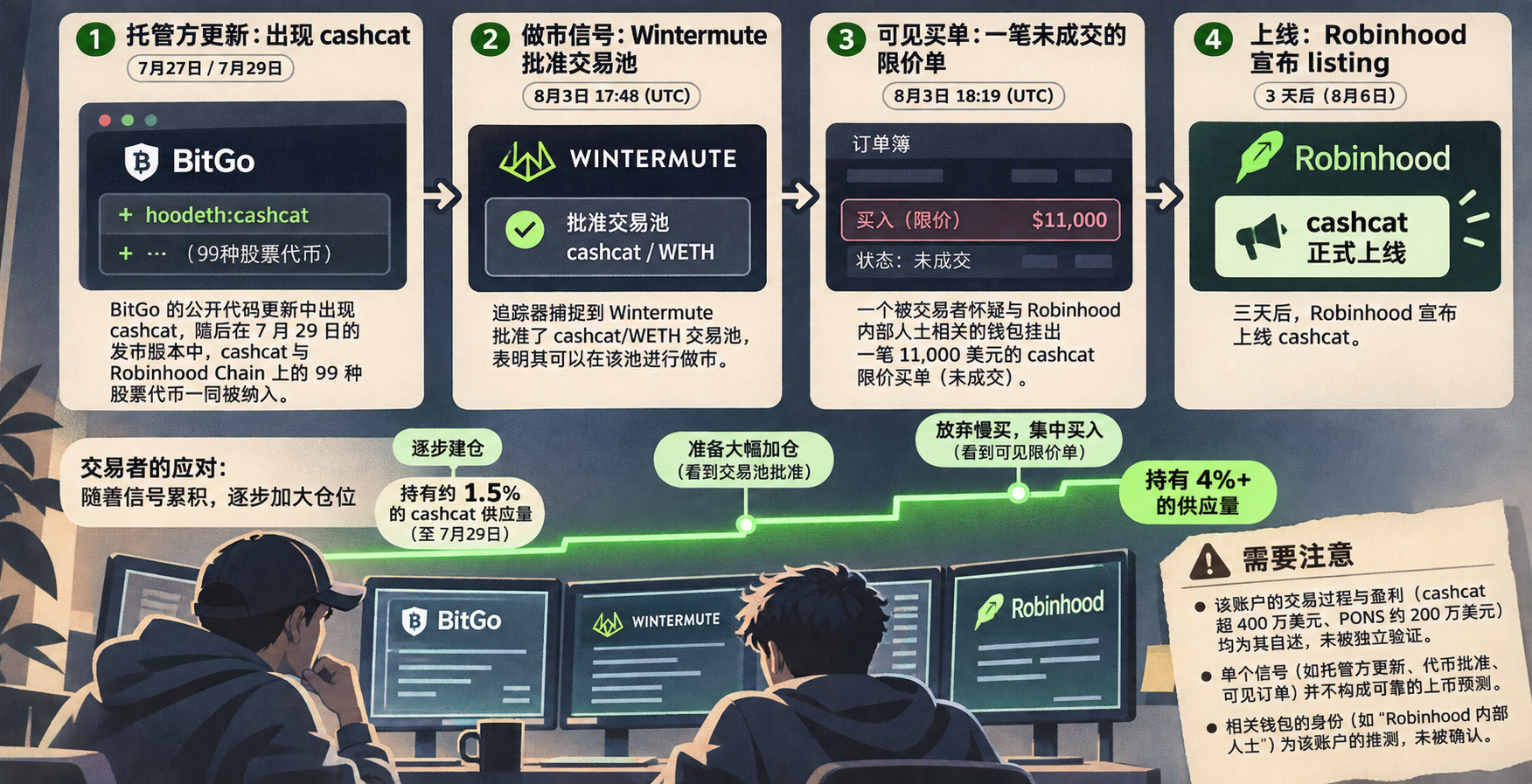
On July 27, 2026, hoodeth:cashcat appeared in a public BitGo pull request, according to the account. The trader said this was not enough on its own to identify Robinhood as the customer: other exchanges also use BitGo. A July 29 BitGo release included cashcat alongside 99 stock tokens on Robinhood Chain. The trader took that combination as stronger evidence of a Robinhood connection. By then, the trader and a partner said they held 1.5% of cashcat’s supply.
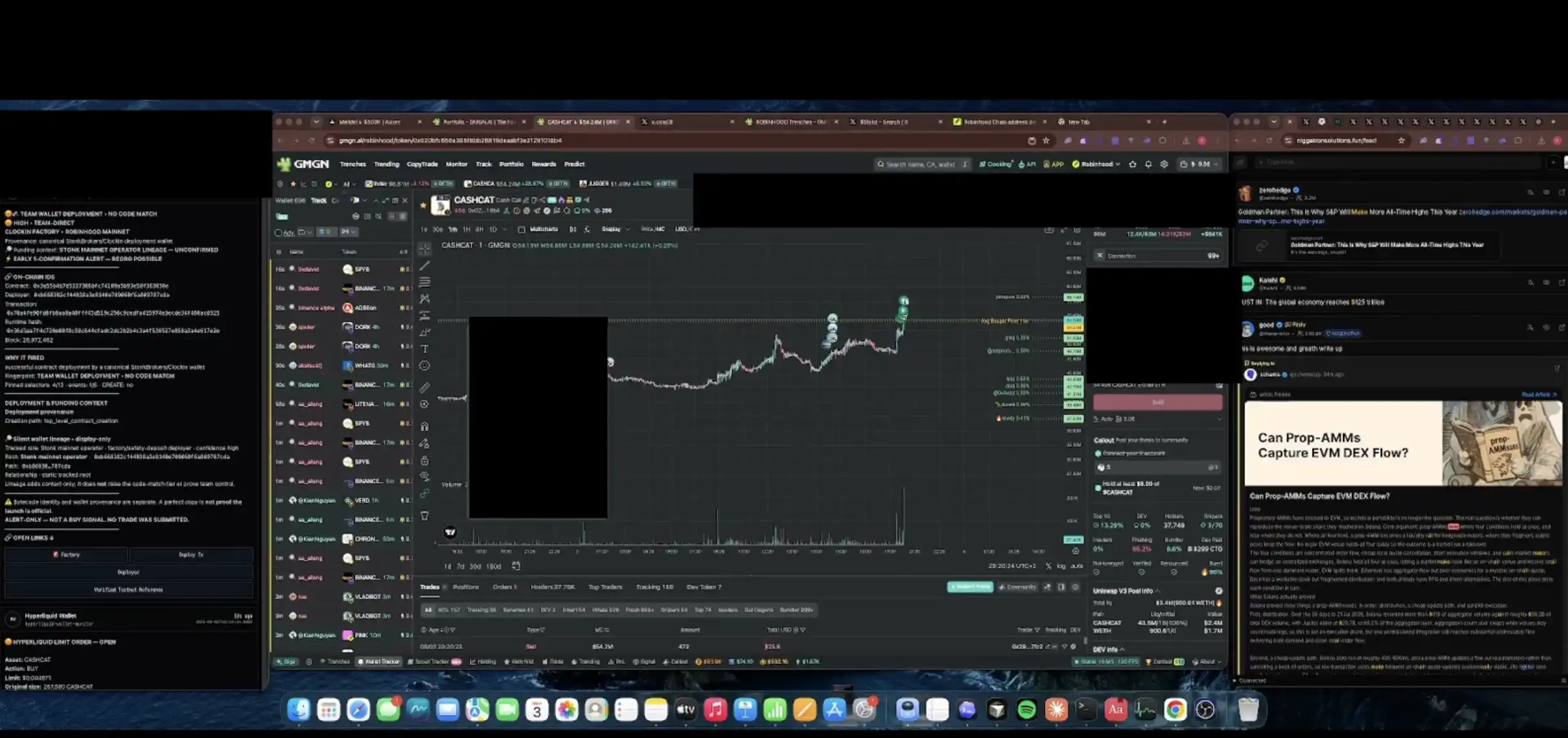
The next signal came at 17:48 UTC on August 3. Their tracker detected Wintermute approving a cashcat/WETH trading pool, the trader said. They had been waiting for either an approval involving cashcat or a cashcat transfer between Wintermute and Robinhood before buying substantially more. An approval indicated where Wintermute could trade; it did not, by itself, establish that a listing was certain.

At 18:19 UTC, a wallet they were watching placed an unfilled $11,000 cashcat limit buy order. The trader suspected the wallet belonged to a Robinhood insider because, they said, it had appeared ahead of previous listings. That identity was an allegation, not a confirmed finding. Concerned that other watchers would react to the visible order, the pair abandoned a slower buying plan. They said they bought more than $1 million of cashcat in that push, bringing their combined holdings to just over 4% of supply.
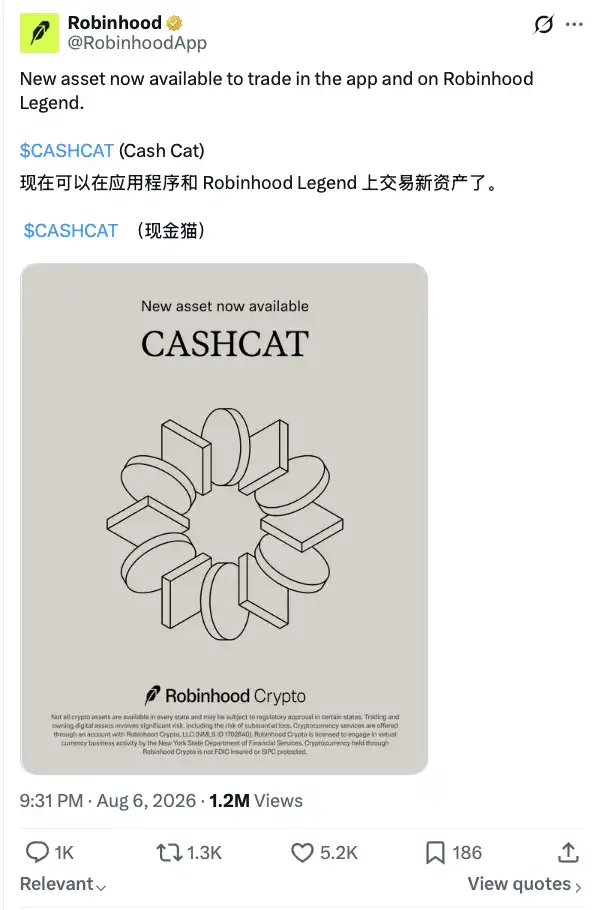
The account says Robinhood listed cashcat three days later and that the pair made more than $4 million from the trade. Those profit figures are self-reported.
What the later PONS trade does—and does not—show
The trader said they began buying PONS on August 28 after pursuing signals further upstream, without disclosing that part of the method. They reported that BitGo added PONS three days later, Wintermute subsequently began making a market in it, and PONS was ‘listed’ on September 2. They said they and friends made $2 million. Their suggestion that the PONS event may have been a Robinhood trap to identify an insider remains speculation.
The case illustrates how the trader changed position size as distinct public signals accumulated. It does not show that a custody update, token approval or observed wallet order is a reliable listing predictor on its own; the account leaves both the disputed wallet identity and the reported returns unverified.