Historical-source note: This article reflects reporting published on November 11, 2026, at 18:26 (UTC+8). The project decisions and network figures below are presented in that reporting context, not as current status.
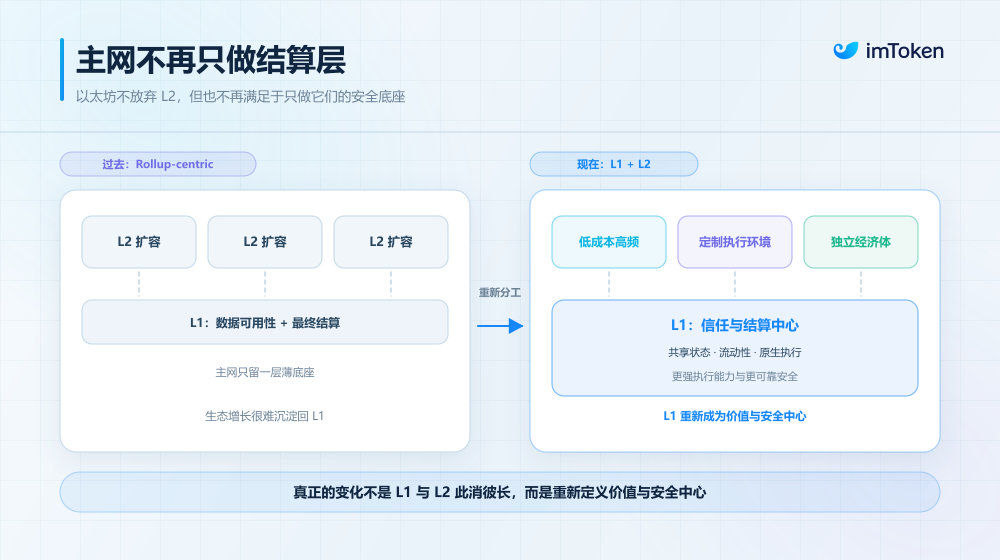
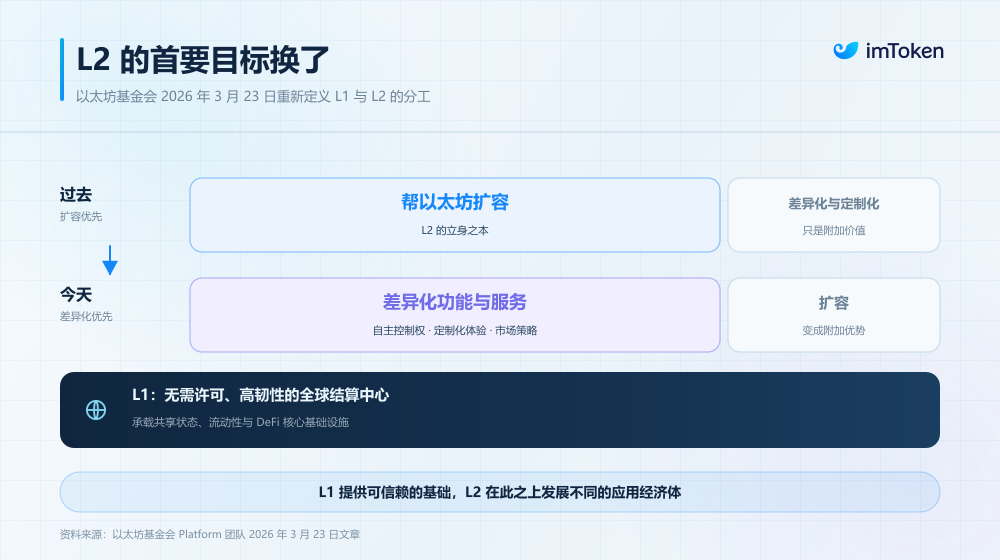
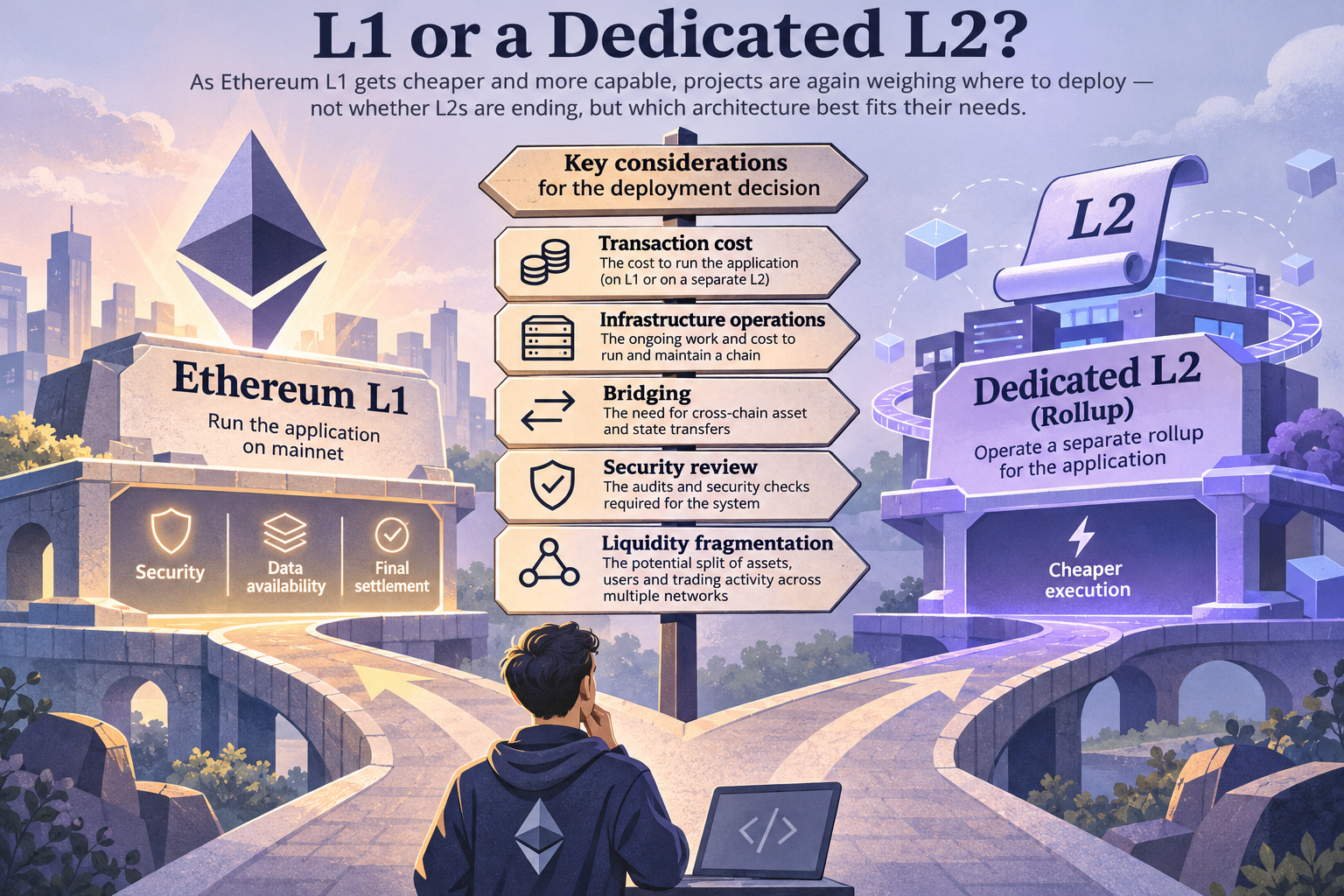
Ethereum’s rollup-centric roadmap assigned L1 the roles of security, data availability and final settlement, while L2s offered cheaper execution. The question raised by several project decisions in 2026 is whether a separate rollup remains worth operating when an application can use Ethereum mainnet at an acceptable cost. That is an architectural question—not evidence that L2s as a category are ending.
The deployment trade-off
ENS offers a concrete example. In 2024, ENS Labs planned Namechain, a dedicated ZK rollup for ENSv2. In February 2026, ENS co-founder Nick Johnson announced that Namechain development would stop and ENSv2 would deploy directly on Ethereum L1, citing faster-than-expected L1 scaling. According to ENS Labs figures cited in the original report, the average gas cost of an ENS registration had fallen by approximately 99% over the preceding year, from nearly $5 to less than $0.05. A dedicated L2 would also have required infrastructure, cross-chain resolution, bridging, audits and ongoing operations.
Other decisions had different motivations. Synthetix published L2s are Dead, Long Live Ethereum in June 2025, citing fragmented liquidity and infrastructure instability, then launched its next-generation perpetuals exchange on Ethereum mainnet that December. The original report also says Trueo announced in September 2026 that it would move its main deployment from Base to L1; ShapeShift moved its rFOX staking program from Arbitrum to mainnet on October 1, noting that most FOX tokens were already held there; and Superseed stopped its L2 in August, planning to move core products to mainnet and pursue application-level yield strategies rather than rely on chain gas revenue for loan repayments. The source reports that Nillion launched Blacklight L1 in October and moved node operations previously on Nillion L2 to Ethereum mainnet, while planning to phase out the L2. It does not explain the relationship between that reported destination and Blacklight L1.
The operating economics of an independent chain are a separate concern. According to the report, Blast announced on October 2 that it would wind down because network maintenance costs exceeded L2 revenue and it saw no reliable path to sustainability. Abstract subsequently announced a plan to close its network on December 15. The report attributes that decision to insufficient liquidity, a limited DeFi ecosystem and a lack of institutional participation, despite more than 144 integrated applications and over 400,000 users. These cases do not establish that all L2 business models have the same weaknesses.
Keep custody and settlement on L1, outsource execution
One alternative to placing an entire application on a rollup is to leave assets and critical state on Ethereum while handling intensive computation elsewhere. The reported Synthetix design illustrates the distinction: L1 contracts hold user assets, an off-chain central limit order book matches orders, and results are settled on mainnet in batches. That reduces the need to bridge assets for order matching, but it does not remove trust questions. The source notes that some margin management still depends on the off-chain order book, which itself warrants scrutiny.
The security distinction also matters across rollups. Citing ETHBEAT, formerly L2BEAT, the original report says that as of November 2026 its dataset covered dozens of L2s, but only a single-digit number had reached Stage 2, with negligible assets there; it describes Base, Arbitrum One and OP Mainnet as Stage 1. Stage labels should not be conflated with Ethereum L1’s own security properties. Proposed native-rollup verification and Ethereum Economic Zone designs aim at closer integration, but the source describes these as research or development directions, not deployed solutions to fragmentation.
The ETH valuation question remains open
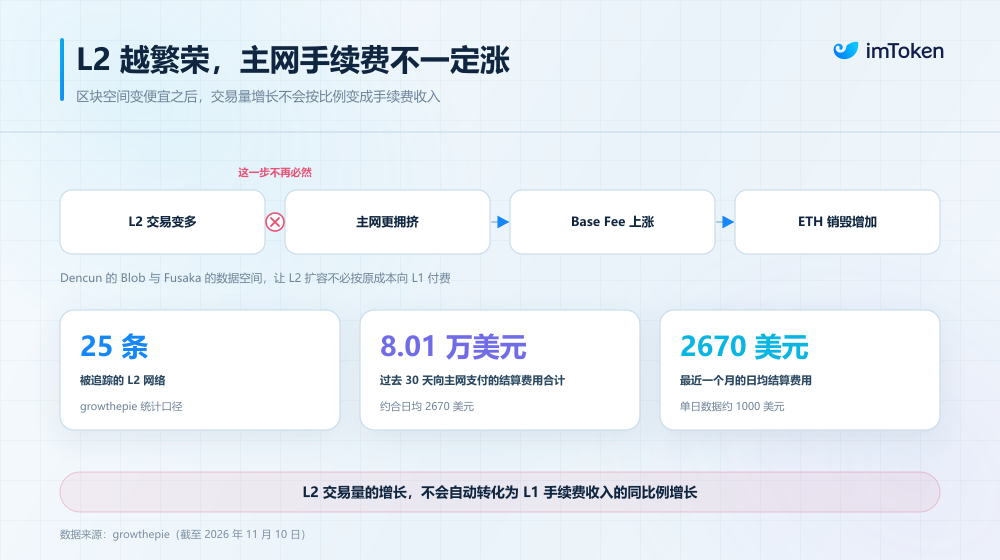
Under EIP-1559, Ethereum burns the base fee while priority fees go to validators. Greater activity does not, however, guarantee proportionally greater burns if scaling lowers the cost of individual transactions. The article uses that tension to question valuation arguments built chiefly on historical fee revenue. It cites the approximately $180 million in fees burned in one day during the 2022 Otherdeed NFT mint as an example of a large burn driven by activity that may not persist.
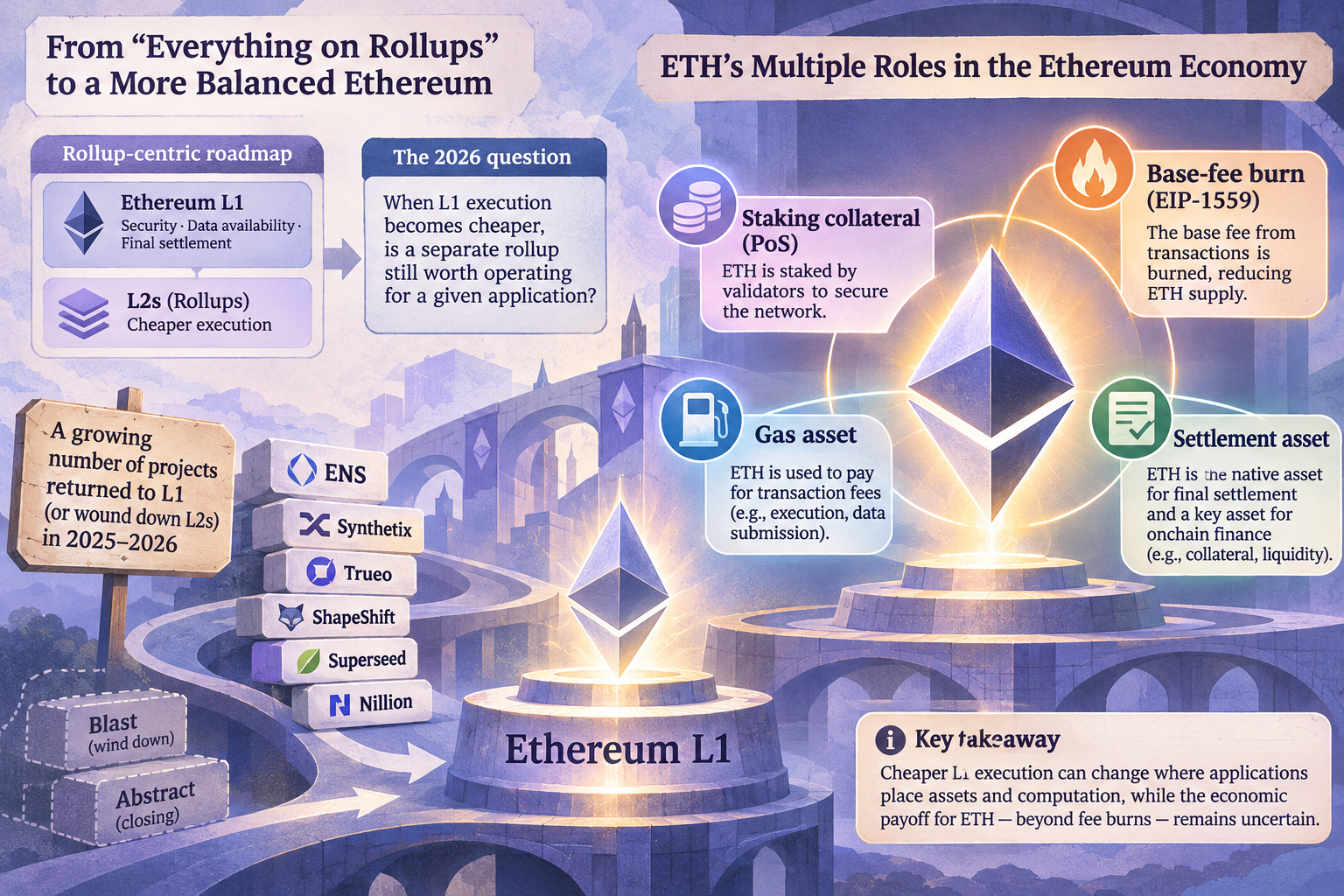
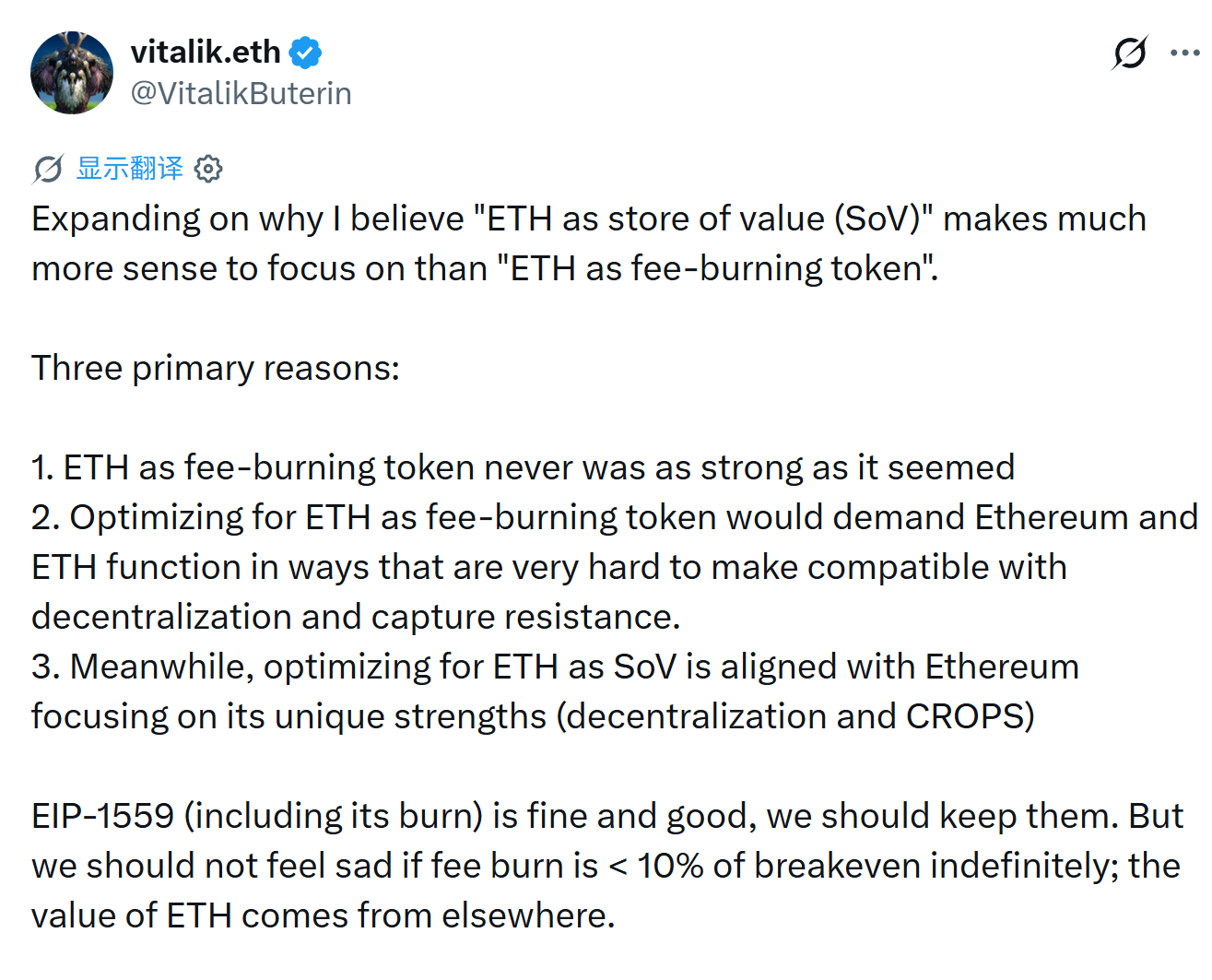
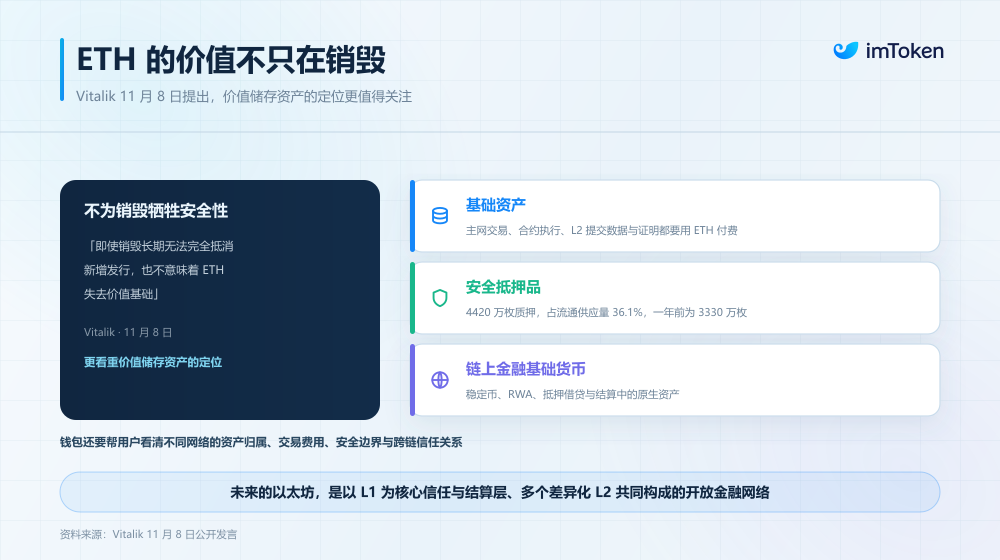
As presented in the source, Vitalik Buterin argues for retaining EIP-1559 while placing more weight on ETH as a store-of-value asset and on Ethereum’s decentralization, censorship and capture resistance, open-source character, privacy and security. Those are an argument about the network’s potential long-term value, not a measured valuation input or proof that L1 migration will raise ETH’s price. The supported conclusion is narrower: cheaper L1 execution can change where applications place assets and computation, while the economic payoff for ETH remains uncertain.