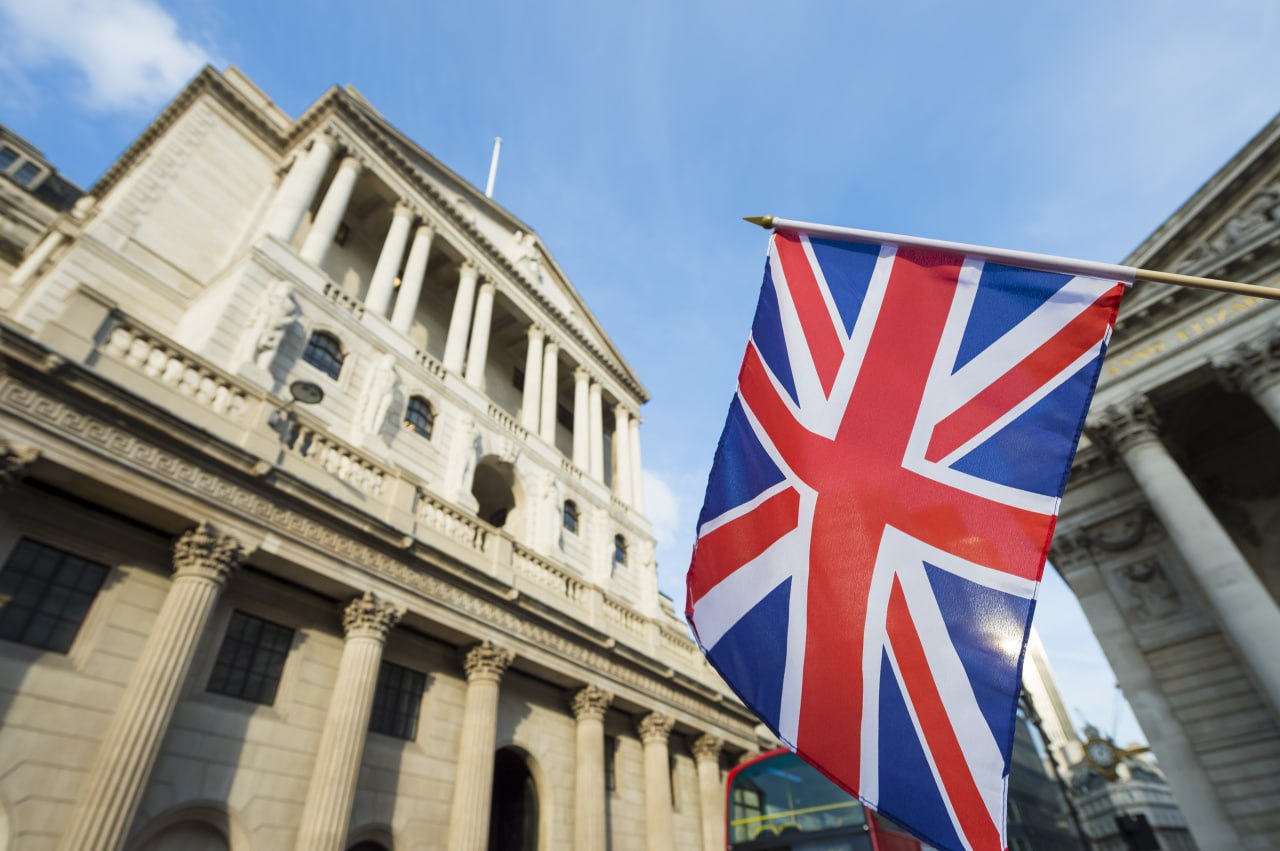
The Bank of England’s November 26, 2026 Financial Stability Report cited the roughly $6.4 billion theft from Binance as an example of the risks posed by “weaknesses in firms’ operational controls.” The Bank attributed the limited fallout for the wider financial system to its relatively weak links with crypto. It has made a similar assessment since at least March 2022, while warning that closer ties could change the risk.
The Binance case leaves a question open: would the fallout have been as limited if customers had borne the loss? Binance committed more than $6.34 billion of its own funds to replace stolen assets. Aave restricted borrowing, and Circle blocked access to stolen funds that had been converted into USDC. Those measures affected different balance sheets; none, on its own, establishes how much Binance ultimately recovered.
What Binance replaced
The October 29 breach began at 20:05 UTC in Binance’s hot wallets, the internet-connected wallets it uses for withdrawals. At 20:24, a single transaction moved 167,464 ETH out of one Ethereum wallet. Binance initially pointed to a compromised laptop, then identified further breach points. It said it had seen no evidence that private keys had leaked. The Bank of England said the attackers appeared to have used social engineering and malware. The estimated theft was more than four times the roughly $1.5 billion taken from Bybit in February 2025.
On October 30, Binance said that $5 billion of the funds it had set aside was already in the tokens it needed, covering about 80% of the loss. It bought the balance on exchanges and through over-the-counter desks. By November 1, Binance reported about 95% coverage, with the gap concentrated in less liquid tokens outside the top ten. That day it reopened withdrawals for a first group of assets, prioritizing user requests. The group included Bitcoin, Ether, USDT, USDC, BNB, Solana and XRP. Deposits had remained open.
Binance declared coverage complete on November 12. It drew on its corporate treasury, its SAFU emergency fund for users and the portion of its futures insurance fund above the minimum required by its risk framework. It did not disclose the split. It pledged to rebuild SAFU to about $1 billion.
Binance’s midnight UTC proof-of-reserves snapshot on November 12 covered 198 tokens; the corresponding zero-knowledge proof was generated two days later. The snapshot showed backing for the customer balances it covered at that moment, not the exchange’s other liabilities or its subsequent financial position. In a court filing, U.S. prosecutors described Binance as self-insuring the loss and said it appeared to have sufficient assets to do so.
Why one Aave loan prompted 292 reserve freezes
At 20:58 UTC on October 29, a wallet linked to the attacker opened what risk adviser LlamaRisk identified as the attacker’s only Aave position across all networks and versions. It supplied 60 million USDT to Aave V3 on Ethereum and borrowed 19,762 wrapped Ether (WETH), then worth about $44.6 million. LlamaRisk later valued the collateral at $59.9 million and the debt at $43.8 million. It reported no bad debt.
The concern was not a shortfall on that loan. It was that the attacker could post more stolen assets as collateral and borrow other depositors’ funds across multiple markets. Aave Labs, TokenLogic and Certora agreed on a freeze. According to LlamaRisk, Aave’s guardian could reverse a freeze directly, whereas changing borrowing caps through a governance vote would have taken about five days.
The first freeze took effect at 21:42 UTC. By 23:04, as another 444,537 AVAX reached the attacker on Avalanche, the last freezes were in place. They covered 175 V3 reserves across 16 networks and 117 V4 reserves. Horizon, Aave’s market for tokenized real-world assets, remained open: its permissioned collateral rules already excluded the attacker.
Freezing a reserve stopped both new borrowing and new deposits. Existing borrowers could repay debt but could not add collateral to protect a weakening position; liquidations and withdrawals continued. As depositors withdrew, utilization—the share of a pool already lent out—reached 92% to 100% in some pools. At full utilization, further withdrawals had to wait for repayments.
Aave’s risk stewards capped borrow rates in affected pools at 10% APR and set borrowing caps about 2% above pre-breach levels, removing roughly $3.7 billion of unused V3 borrowing capacity. Aave’s GHO stablecoin slipped to about $0.997 as holders exchanged 4.6 million GHO for USDT through its stability module. The four-wave rollback plan gave no completion dates. USDT, USDC and several other V3 assets remained at zero loan-to-value, so they could not back new loans.
Blocked USDC is not money returned
According to U.S. prosecutors, some stolen funds passed through multiple tokens, providers and addresses before reaching USDC at 36 addresses on 18 blockchains. Circle initially blocked access voluntarily. On November 6 it said it would maintain the block if the government obtained a restraining order. A court issued the order on November 12 with Circle’s and Binance’s consent.
On November 23, the Justice Department sought civil forfeiture of more than $1.1 billion in blocked USDC. Prosecutors attributed the attack to North Korean cyber actors. The requested forfeiture was not a completed recovery: the USDC remained blocked pending the case. For comparison, Circle had reported $131.2 million in USDC across all access-denied addresses on September 30, less than one-eighth of the Binance-linked block alone.
The Justice Department said U.S. authorities had helped freeze, seize or return more than $2.9 billion in crypto since the theft. Binance separately reported about $3 billion frozen on-chain within a day of the breach. These are not additive recovery totals, and neither identifies the amount returned to Binance.
The redemption channel the data cannot yet measure
A withdrawal of USDC from Binance moves tokens off the exchange. A redemption at Circle requires the issuer to pay dollars from its reserves. That distinction matters for the Bank of England’s assessment: only the second step directly draws on the assets backing USDC.
Circle’s September 30 quarterly filing recorded $73.9 billion of USDC in circulation and $62.5 billion in the Circle Reserve Fund. Circle described the remaining reserves as mostly cash at a handful of large banks. Heavy redemptions could draw down those deposits and require the fund to sell short-dated Treasuries or unwind repurchase agreements.
Binance was already a significant distribution partner: Circle’s payments to the exchange vary with the amount of USDC held there. On September 17, Binance also bought 1.2 million Circle shares at $80.84 each, for $100 million. Transfer restrictions of up to two years meant those shares were not a ready source of cash for replacing stolen tokens.
By covering customer balances and reopening USDC withdrawals on eight networks in the first phase, Binance reduced one reason customers might rush to redeem. As of November 27, Circle’s public filings did not cover the post-breach weeks, so they could not establish whether USDC circulation had changed. Its October and November reserve reports could help answer that question. Progress on rebuilding SAFU and the outcome of the forfeiture case would answer different ones: how much protection Binance restored for a future loss, and what became of the blocked funds. Until then, the limited spillover is consistent with the Bank’s assessment, but does not isolate weak financial links from Binance’s ability to absorb the theft.