Historical-source note: This article is based on Alea Research’s analysis, translated and published by Deep Tide TechFlow on November 11, 2026, at 09:41 (UTC+8). The figures and forward-looking dates below reflect that reporting period.
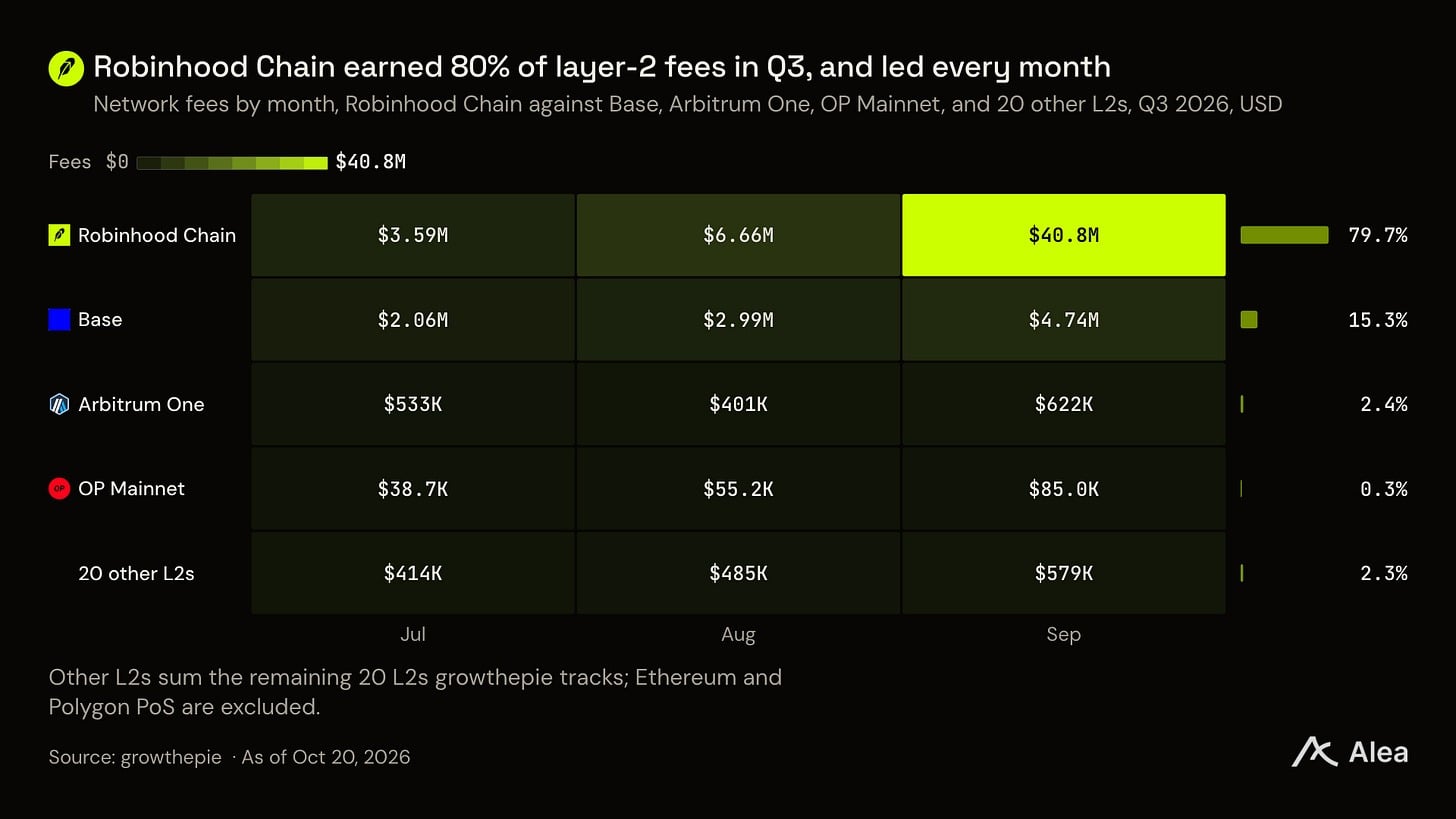
Robinhood Chain accounted for roughly 80% of Ethereum Layer 2 network fees in Q3 2026, its first full quarter after mainnet launch, according to Alea Research. It generated $51 million in network fees, while its on-chain exchange volume reached $90.7 billion. The latter exceeded the combined $50 billion in crypto trading volume reported for the Robinhood app and Bitstamp, though those figures describe different trading venues.
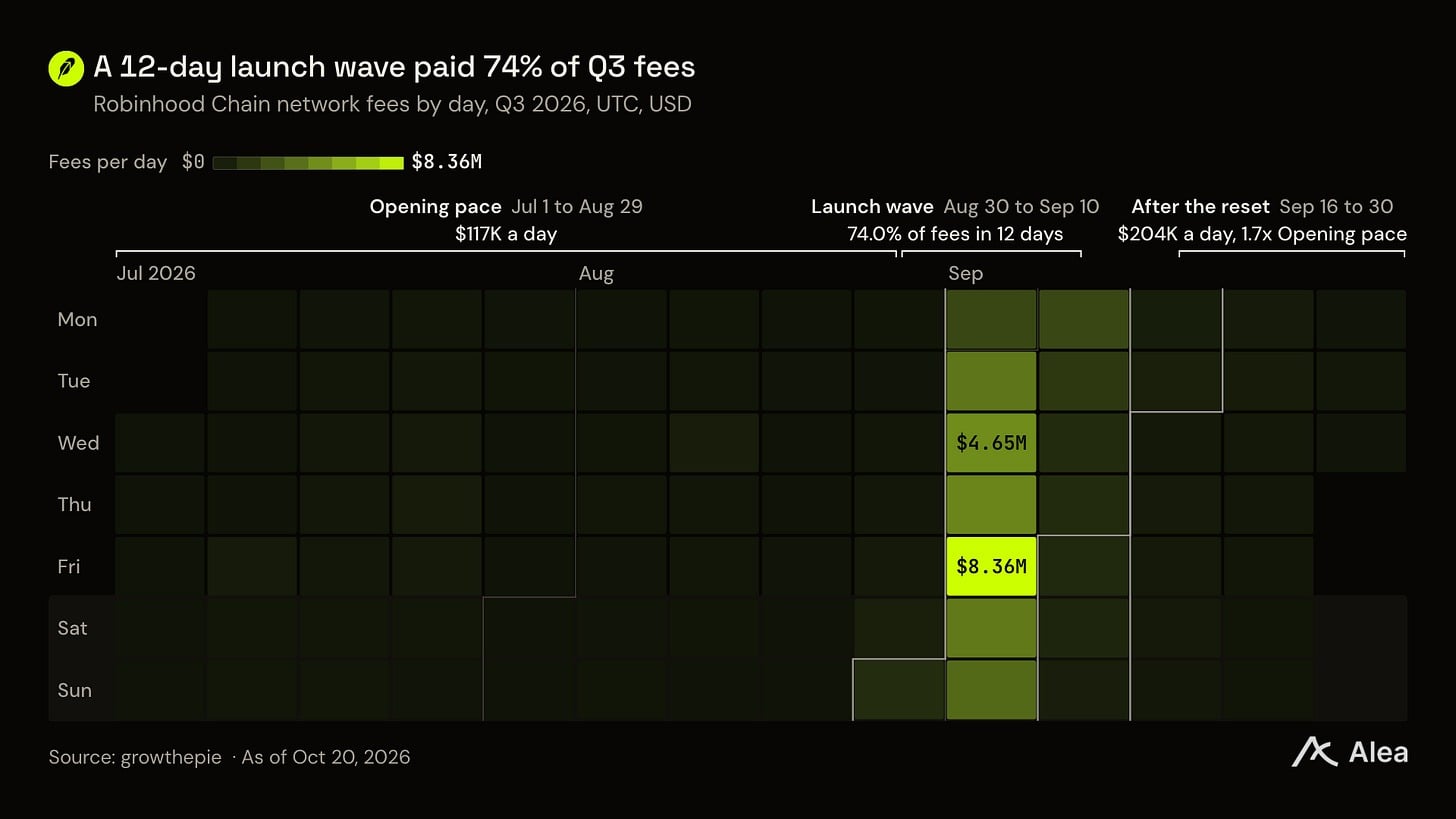
The central question is how much of the fee lead depended on a short-lived surge. A 12-day token-launch wave, from August 30 through September 10, produced 74% of Robinhood Chain’s quarterly network fees. Excluding that period, Alea Research calculated that the chain still accounted for 57.7% of all L2 network fees over the other 80 days, versus 30.7% for Base. By the final week of September, however, its average daily fees had fallen back near their early-quarter dollar level.
Where the fees came from
The source attributes the spike largely to Pons V2, whose factory contract launched on August 4. It reports 648,701 token launches and says demand pushed gas use above the network’s configured target, raising base fees as transactions accumulated. Network fees reached $8.36 million on September 4—more than twice July’s total. Average gas paid per transaction across Q3 was 6.4 cents, compared with 1.4 cents before the launch wave. Robinhood raised the network gas target twice within three days, to 40 million gas per second, and lowered it to 15 million on October 18.
That peak is not a reliable run rate. Alea Research reports average daily network fees of $121,000 in September’s final week and $54,600 from October 1–19; gas consumed by launch platforms fell 91% over the latter comparison period.
What Robinhood retained
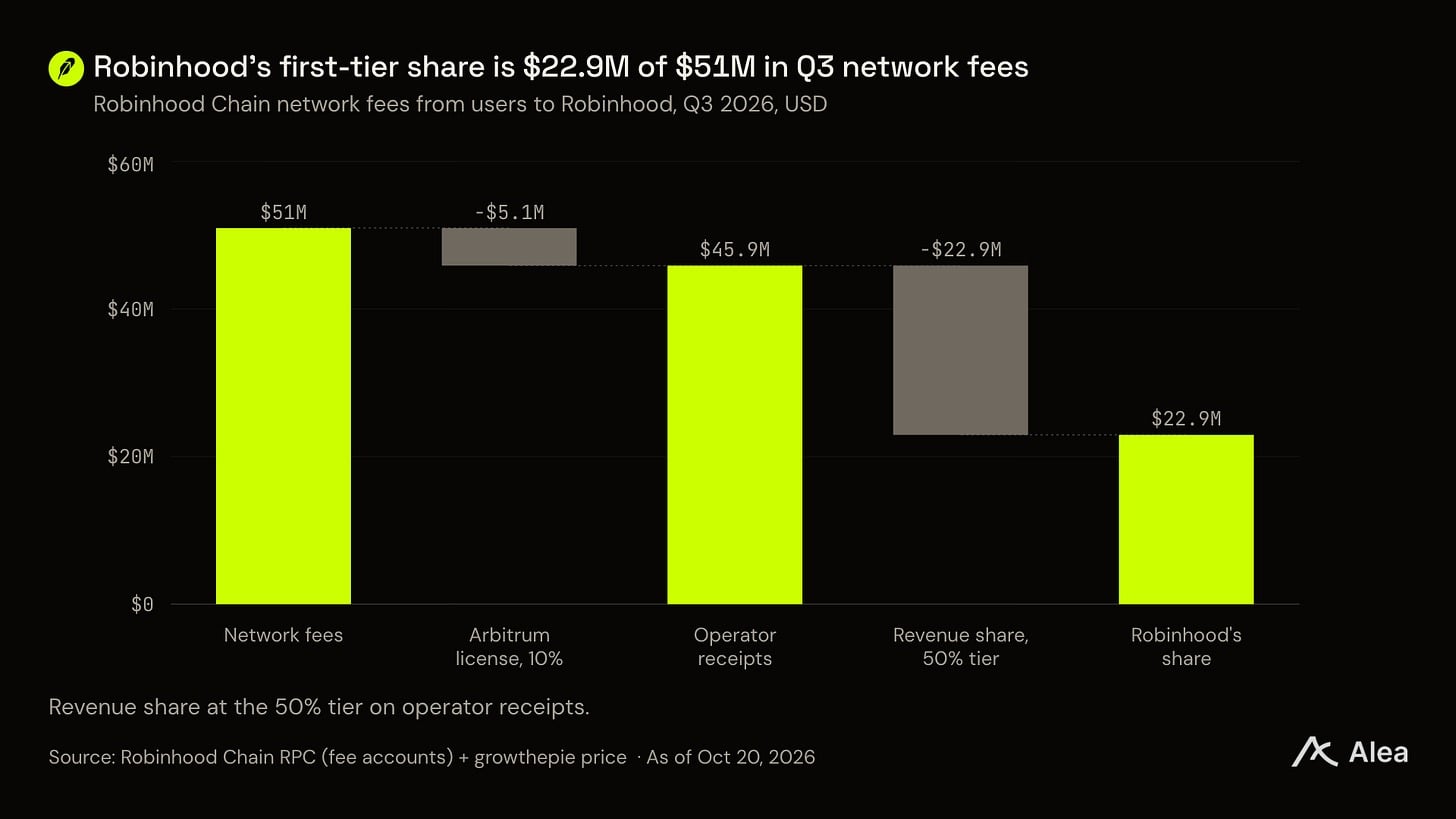
Robinhood Chain uses the Arbitrum technology stack and has no native token. Under the arrangement described in the source, Arbitrum receives a technology-licensing fee equal to 10% of gross network fees. Robinhood retains 50% of the remainder at the initial revenue-sharing tier, with its share scheduled to rise to 70% and then 85% as cumulative operator revenue grows. Applying the initial tier to Q3 yields an estimated $22.9 million for Robinhood—equivalent to about 19% of the $120 million in total quarterly crypto-business revenue cited in the analysis. The estimate is a share of network fees, not the full $51 million.
The source separately reports $593 million in application-layer fees paid by traders in Q3, of which application operators retained $147 million. Those fees should not be conflated with Robinhood Chain’s network-fee revenue.
Stock tokens: evidence and limits
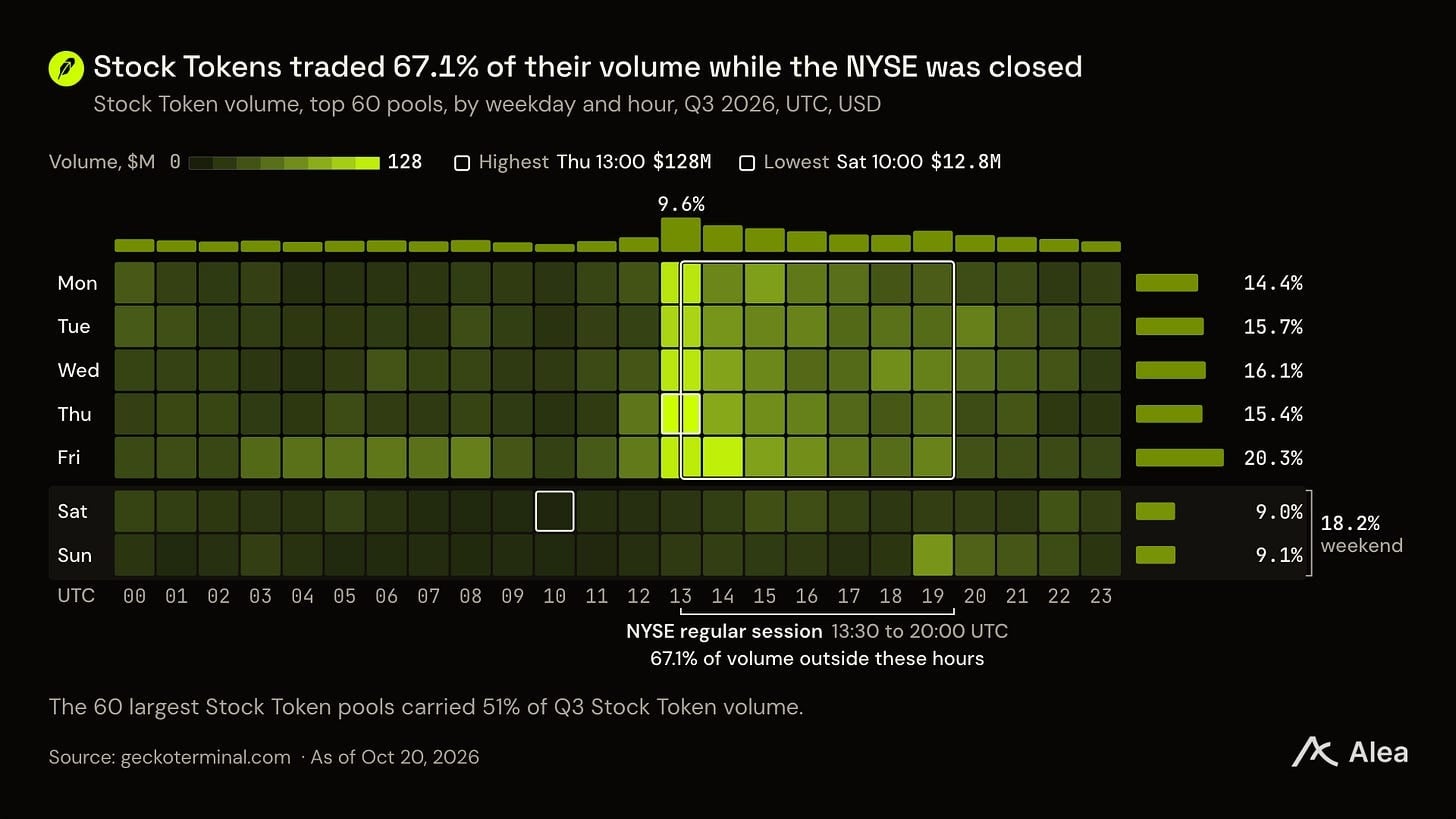
Stock tokens grew from 2.6% of the chain’s DEX volume in July to 15.6% in September, according to Alea Research. For the 60 highest-volume stock-token pools in Q3, 67.1% of trading occurred outside regular New York Stock Exchange hours, including 18.2% on weekends. In the analysis’s sample of 37 weekend or holiday price moves of at least 1%, token prices indicated the direction of the underlying stock’s move before Monday’s open in every case; their median estimate of the move’s magnitude was 86%.
That is evidence of off-hours price discovery within the measured sample, not proof that tokens always predict the next stock price. The source describes these tokens as debt claims backed one-to-one by underlying shares and minted only by Robinhood-owned Bitstamp. Minting and redemption against the underlying shares were closed on weekends. Holder voting and redemption into shares were plans without a stated timetable, not features of the product at the reporting date.
The analysis also identifies two tests that had not yet played out. Based on its October pace, it projected a move to the 70% fee-sharing tier around December 25, 2026. Robinhood Wallet’s gas subsidy for swaps above $0.50 was scheduled to expire on December 31, making subsequent fee demand a test of activity without that subsidy. Neither projection should be read as an outcome confirmed by the November 11 report.
Source: techflowpost.com (originally published 2026-11-11 09:41 UTC+8)