Historical report: this article reflects information published on November 10, 2026, at 10:59 a.m. UTC+8. The dates and milestones below are described from that reporting point, not as current developments.
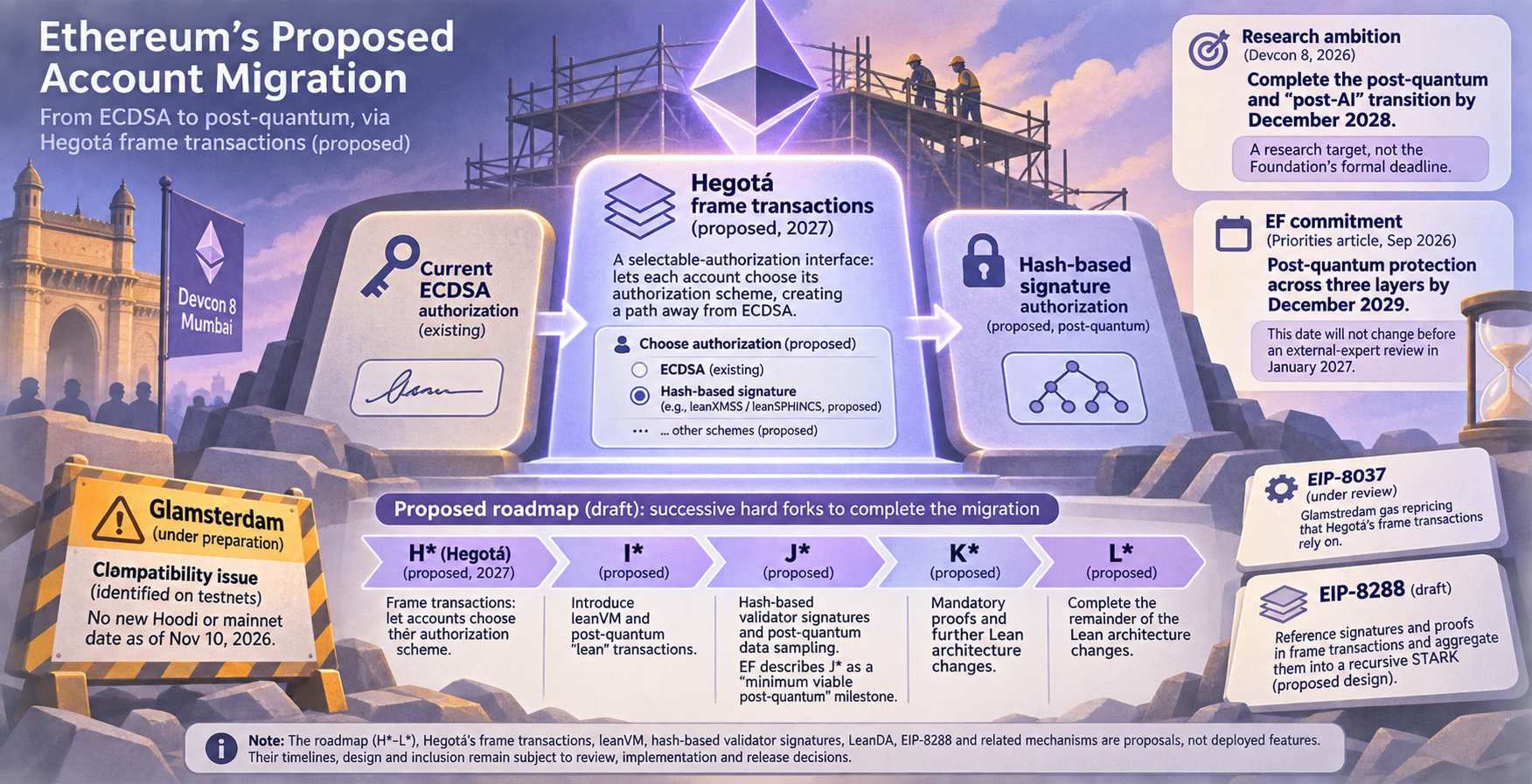
At Devcon 8 in Mumbai, Ethereum Foundation researcher Justin Drake set out an ambition to complete Ethereum’s post-quantum and “post-AI” transition by December 2028. That is a research target, not the Foundation’s formal deadline. An EF priorities article published in September 2026 committed to post-quantum protection across three layers by December 2029 and said that date would not change before an external-expert review in January 2027.
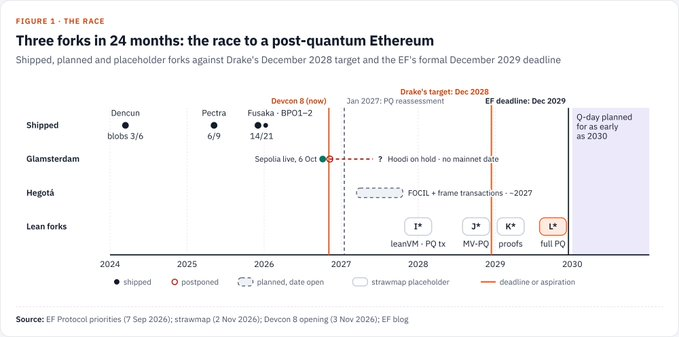
The distinction matters because the proposed transition depends on successive hard forks. The Devcon timeline calls for three forks within 24 months after Glamsterdam—roughly one every eight months. As the source reported, Glamsterdam itself had encountered a compatibility problem before reaching mainnet.
The proposed migration path
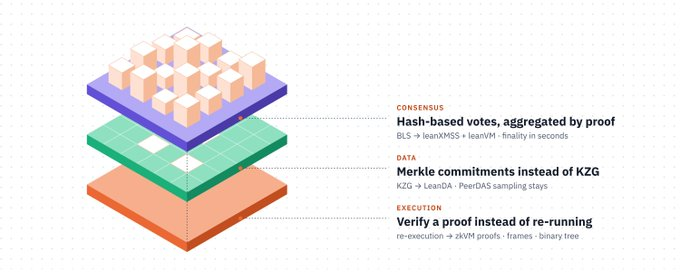
The EF roadmap draft places the work across forks provisionally labeled H* through L*. Hegotá, planned for 2027, is not itself the post-quantum fork. Its proposed frame transactions would let accounts choose their authorization scheme, creating a path away from ECDSA without requiring a separate fork for every replacement signature scheme. I* would introduce leanVM and post-quantum “lean” transactions; J* would add hash-based validator signatures and post-quantum data sampling. The EF describes J* as a “minimum viable post-quantum” milestone. K* and L* would carry mandatory proofs and the remainder of the Lean architecture changes.
These are roadmap proposals, not deployed features. They also have dependencies: the reported plan for Hegotá’s frame transactions relies on EIP-8037, a Glamsterdam gas-repricing proposal under review at the time of publication.
Why Glamsterdam became a schedule warning
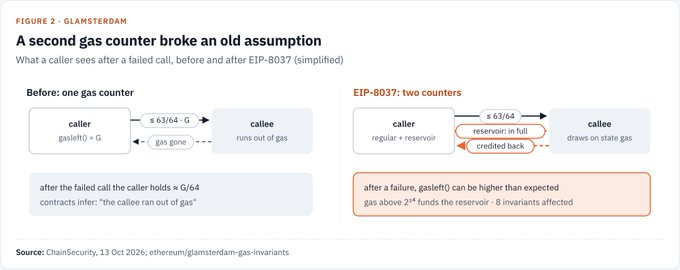
Glamsterdam began running on the Sepolia testnet on October 6, 2026. Under EIP-8037, writing a new storage slot would rise from 22,100 to 110,020 gas; deploying a 24 kB contract would cost about eight times as much, according to the source. A separate state-gas reserve was designed to accommodate the repricing. ChainSecurity warned that this could allow some error handlers previously stopped by gas exhaustion to finish running, bypassing checks used by deployed contracts. The EF identified eight broken invariants, and an AllCoreDevs summary counted 13 affected DeFi projects.
Glamsterdam was removed from a second testnet on October 22, Hoodi was delayed, and no new Hoodi or mainnet date had been given by the reporting date. All Core Devs coordinator Nixo wrote that the issue would “very likely” push Glamsterdam mainnet into 2027. That was an assessment, not a confirmed release date. The episode illustrates the delivery constraint: changing observable gas behavior can break assumptions in existing contracts even when the proposed protocol mechanism has a clear purpose.
Smaller on-chain references, larger off-chain work
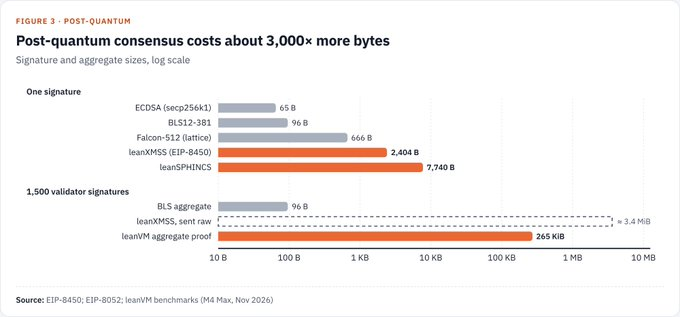
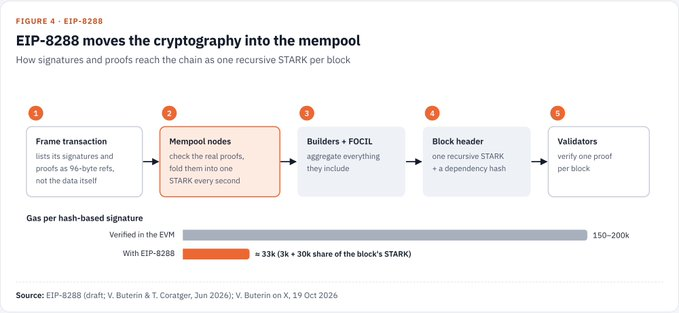
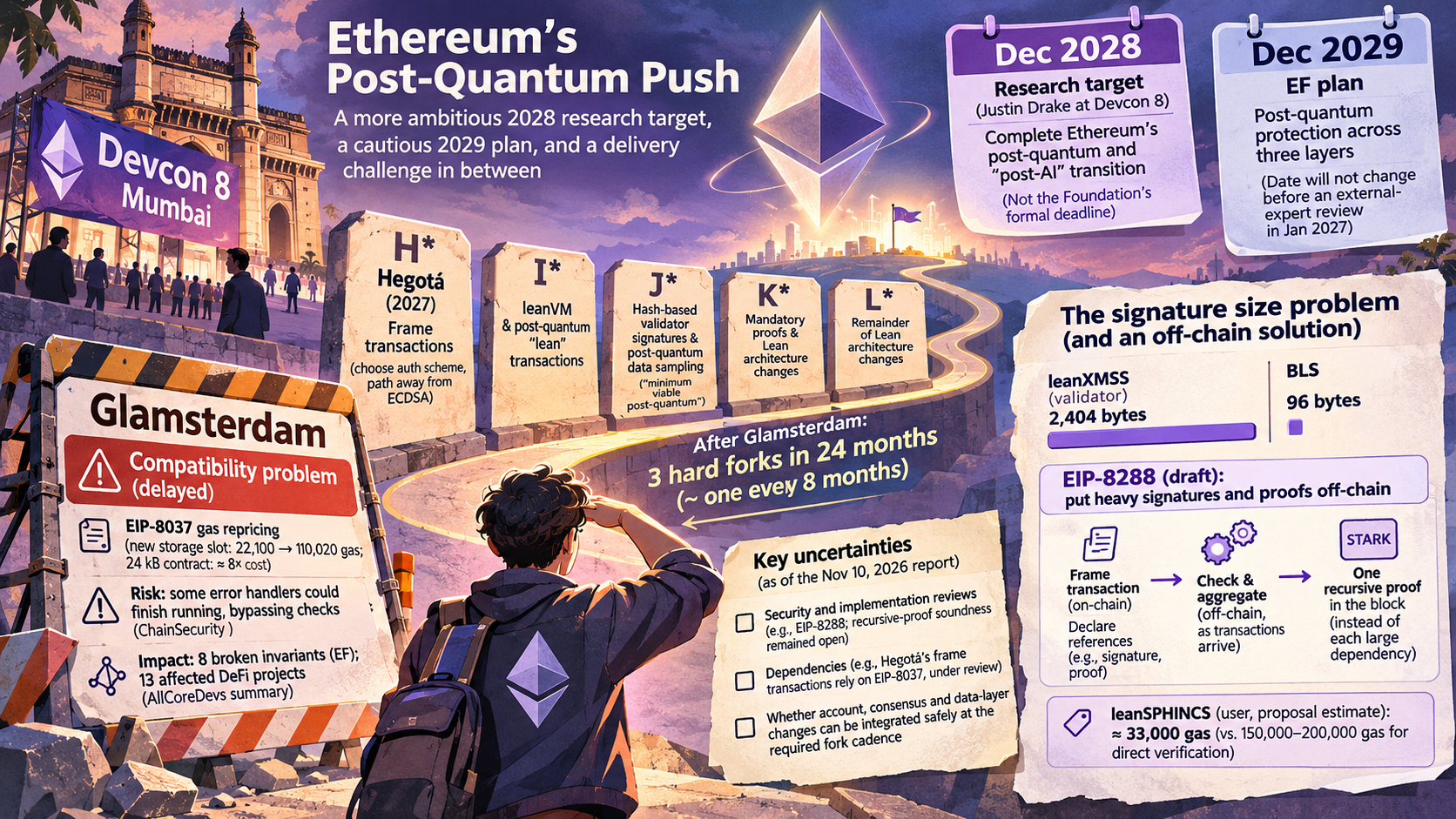
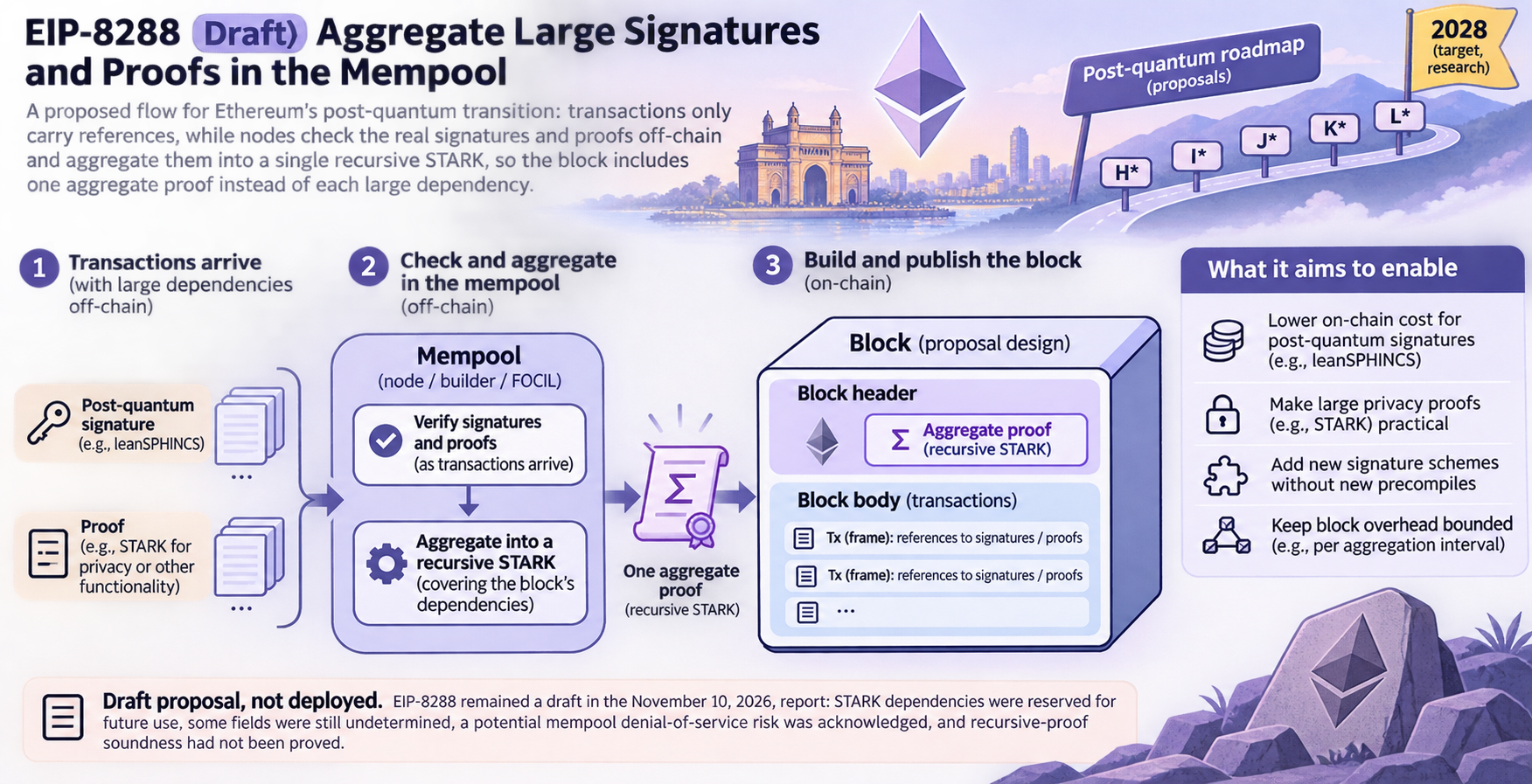
The proposed signature migration has a size problem. The source reports a 2,404-byte leanXMSS validator signature versus 96 bytes for BLS; unlike BLS signatures, hash-based signatures cannot simply be added together. Its account of EIP-8288, a draft co-authored by Vitalik Buterin and Thomas Coratger, describes a different approach for user transactions: declare references to signatures and proofs in a frame transaction, check the underlying material as transactions arrive, and aggregate it into a recursive STARK so the block carries one aggregate proof rather than each large dependency.
The reported estimate for a leanSPHINCS signature under that design is about 33,000 gas, compared with 150,000–200,000 gas for direct verification. That is a proposal estimate, not a measured mainnet cost. EIP-8288 remained a draft in the November 2026 report: STARK dependencies were reserved for future use, some fields were still undetermined, and the authors acknowledged a potential mempool denial-of-service risk. The report also says recursive-proof soundness had not been proved. Separately, although Drake described leanVM as end-to-end formally verified, the source distinguishes Lean 4 proofs of instruction semantics and constraint soundness from a Rust implementation tested differentially; it says recursive-proof soundness remained open.
The research question is therefore not only which cryptographic primitives Ethereum will choose. It is whether their account, consensus and data-layer changes can be integrated safely at the fork cadence needed for the earlier target. As of the original reporting date, both the December 2028 ambition and several mechanisms needed to reach it remained subject to review, implementation and release decisions.
Source: panewslab.com (originally published 2026-11-10 10:59 UTC+8)